Beneficios de higiene Airflow for a healthier smile
agosto 3, 2026
Best Foods After Oral Surgery: What to Eat
agosto 7, 2026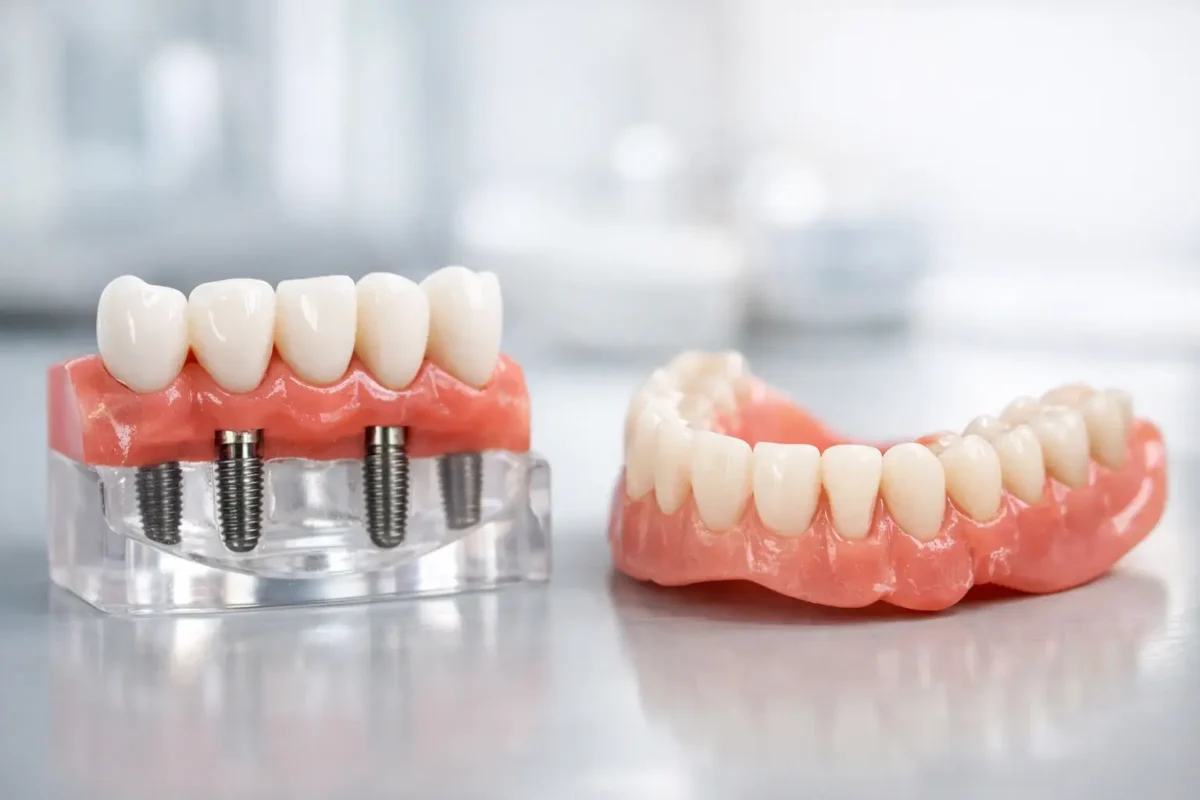
A missing tooth can change more than the way a smile looks. It can make a favorite meal harder to enjoy, affect speech, and leave you conscious of a visible gap in meetings or photographs. When deciding between an implant bridge or dentures, the best choice is rarely just about price. It is about how you want your teeth to feel, function, and fit into daily life.
Both treatments can restore a smile beautifully. The right option depends on how many teeth are missing, the health of your gums and jawbone, your priorities around comfort and convenience, and your budget. A thoughtful consultation should make these choices clear rather than push you toward one solution.
What is an implant bridge?
An implant bridge is a fixed replacement for one or more missing teeth. Dental implants, which are small titanium posts placed in the jawbone, act as replacement tooth roots. Once they have integrated with the bone, they support a custom bridge made to look and function like natural teeth.
For example, if several teeth are missing in a row, implants may be placed at strategic points and used to support the teeth between them. This avoids the need to place an implant for every missing tooth while still providing a stable, fixed result. For a full arch, a bridge may be supported by a carefully planned number of implants rather than an implant beneath every tooth.
Because it is fixed in place, an implant bridge is brushed much like natural teeth. It does require cleaning beneath the bridge with special brushes or flossing aids, but it does not need to be removed at night.
What are dentures?
Dentures are removable replacements for missing teeth. A partial denture fills spaces where some natural teeth remain, while a full denture replaces all teeth in the upper or lower jaw. Modern dentures can look natural and are made specifically for the shape of your mouth, gum tissue, and bite.
A conventional denture rests on the gums and may use natural suction, clasps, or adhesive for support. This makes it a less invasive route than implant treatment, particularly for patients who want to avoid surgery or need an immediate replacement after extractions.
There is also a middle option worth discussing: implant-retained dentures. These remain removable for cleaning but click securely onto implants. They can offer a major improvement in stability over a traditional denture without the cost of a fully fixed bridge.
Implant bridge or dentures: the everyday difference
The practical distinction is stability. An implant bridge is anchored in the jaw, so it generally feels closer to having natural teeth. Most patients can speak, laugh, and eat with confidence without worrying that the restoration will shift. This is especially meaningful for a lower full denture, which can be more difficult to keep stable due to the movement of the tongue and jaw.
Dentures can work very well, but they take an adjustment period. New dentures may initially feel bulky, and speech can require practice. Some foods, particularly hard, sticky, or very crunchy choices, may need more care. A properly fitted denture should not cause persistent sore spots, but changes in the gums and jaw over time can affect the fit and make adjustments necessary.
An implant bridge also helps transfer chewing forces into the jawbone. After tooth loss, the bone in that area naturally begins to shrink because it no longer receives stimulation from a tooth root. Implants can help preserve bone around their position. Dentures restore appearance and some chewing ability, but they do not prevent the gradual bone changes that occur beneath a missing tooth or full denture.
That does not mean dentures are a poor choice. For someone who needs an efficient solution, has significant medical considerations, or prefers to avoid surgery, a well-designed denture can provide a comfortable and attractive result. The question is whether its removable nature suits your expectations.
Comfort, appearance, and confidence
A good restoration should not announce itself when you smile. Both implant bridges and dentures can be designed with realistic tooth shape, color, and gum contours. The quality of planning and craftsmanship matters as much as the treatment category.
Implant bridges often feel more natural because they are fixed. There is no acrylic plate across the palate for many upper implant options, which can make food taste and temperature easier to notice. Patients also appreciate not having to remove the restoration after dinner or before bed.
Dentures may be the more suitable choice when facial support is a priority. Over time, missing teeth and bone loss can change the profile of the lips and cheeks. A full denture can be shaped to restore this support. With implant treatment, the dentist plans tooth position and facial appearance carefully, sometimes alongside bone grafting or other preparatory care, to achieve a balanced result.
Treatment time and the role of planning
Dentures can often be made relatively quickly. If teeth need to be removed, an immediate denture may sometimes be placed on the same day, so you are not left without teeth during healing. It is usually a temporary step, as the gums and bone change considerably after extractions. A final denture is then adjusted or made once healing is complete.
An implant bridge requires more planning and usually more time. Digital scans, X-rays, and sometimes 3D imaging are used to assess bone volume, bite, and the position of nearby structures. If there is enough healthy bone and the clinical situation is favorable, same-day implant solutions may be possible. In other cases, implants need several months to heal before the final bridge is fitted.
Bone grafting, gum treatment, smoking, uncontrolled diabetes, teeth grinding, and certain medications can influence timing and suitability. These are not automatic barriers to implants, but they need to be considered honestly. A safe, predictable plan is more valuable than a rushed one.
Cost is important, but so is long-term value
Dentures usually have a lower upfront cost than an implant bridge. They can therefore be an accessible solution when several or all teeth need replacement. However, they may need relining, repair, or replacement over the years as the mouth changes.
An implant bridge has a higher initial investment because it includes surgical placement, detailed planning, high-quality restorative materials, and follow-up care. It may offer greater comfort, stability, and long-term convenience, but it still requires maintenance. Implants can develop inflammation if plaque is allowed to build up, and bridges can need repair or renewal in the future.
A transparent treatment plan should separate the stages of care and explain what is included. Ask about diagnostic imaging, temporary teeth, implant surgery, the final bridge or denture, hygiene visits, and expected maintenance. Comparing two prices without comparing the treatment details can be misleading.
Caring for each option
An implant bridge is not maintenance-free. Brush it carefully twice a day, clean beneath it as instructed, and attend regular hygiene and review appointments. If you clench or grind your teeth, a protective nightguard may help protect the bridge and implants.
Dentures should be removed and cleaned daily with a denture brush and appropriate cleanser. They should not be cleaned with abrasive toothpaste, which can scratch the surface. Your gums, tongue, and any remaining natural teeth still need daily cleaning, and regular dental examinations remain essential.
In either case, ongoing care protects not only the restoration but also your gum health, bite, and overall comfort.
How to make the decision with confidence
The best choice begins with an examination, not an assumption. Your dentist should assess the number and position of missing teeth, gum health, jawbone condition, bite, medical history, and the appearance you hope to achieve. Just as importantly, they should ask how you live: whether you travel often, enjoy particular foods, dislike removable appliances, or need a solution within a certain timeframe.
At The British Dental Clinic, clear communication is central to this process. For international patients in Barcelona, being able to discuss treatment, timing, and costs in plain English can make a complex decision feel much more manageable.
If you want the closest experience to fixed natural teeth and are clinically suitable, an implant bridge may be a strong long-term option. If you need a non-surgical or more budget-conscious solution, dentures can still restore comfort, appearance, and confidence. And if you are drawn to the benefits of both, implant-retained dentures may be the answer.
The most helpful next step is a personalized assessment with enough time to ask questions. A treatment that fits your mouth, your priorities, and your life will always feel like the better decision.