Porcelain Veneers Review Guide for Your Smile
octubre 18, 2026
Can Cavities Heal Naturally? What Tooth Decay Needs
octubre 22, 2026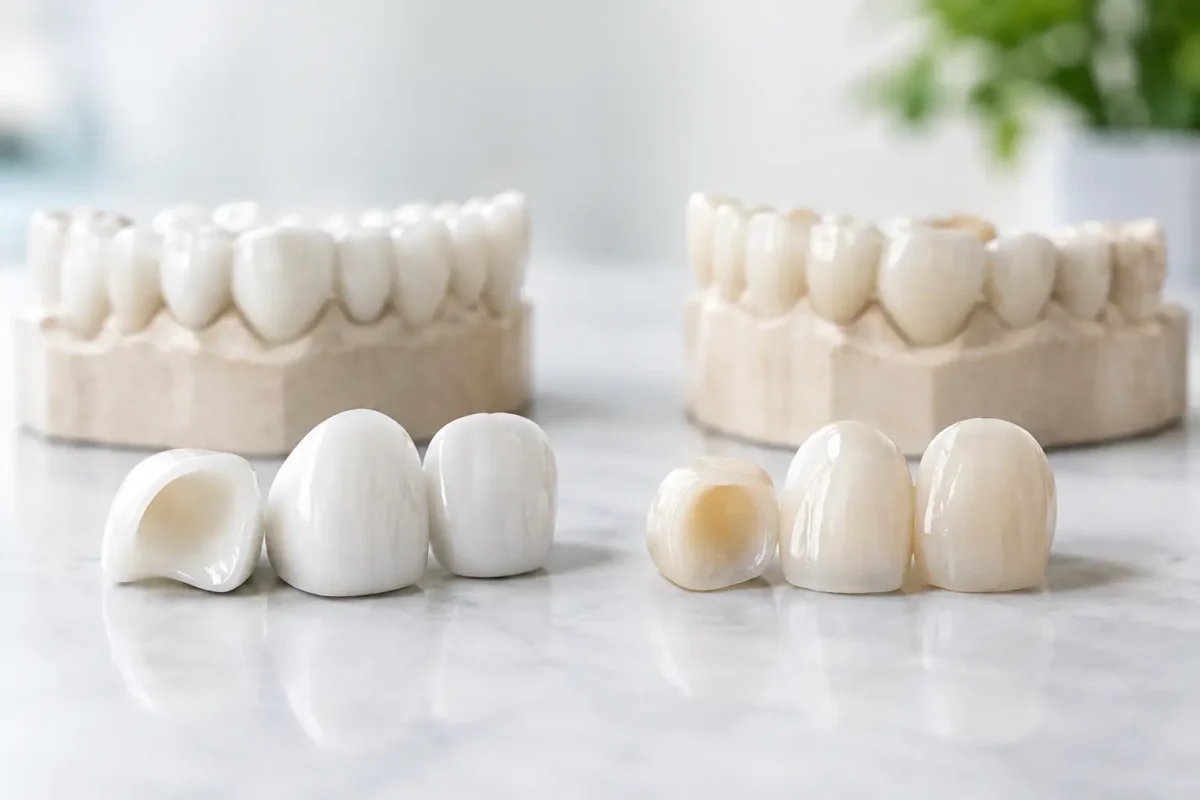
A crown should do more than cover a damaged tooth. It needs to feel comfortable when you chew, suit your smile, protect the remaining tooth structure, and hold up to daily life. When patients are considering zirconia versus porcelain crowns, the question is rarely about which material is universally better. It is about which material is right for that tooth, your bite, and the result you want.
The good news is that both can produce beautiful, long-lasting restorations. The better choice comes from a careful assessment rather than a one-size-fits-all recommendation.
Understanding zirconia versus porcelain crowns
Zirconia is a highly durable dental ceramic. It is made from zirconium dioxide and is known for its exceptional resistance to fracture. Modern zirconia crowns can be made as a solid, single-material restoration or designed with layers that create greater translucency and a more natural appearance.
Porcelain is often used as an umbrella term for tooth-colored ceramic crowns. In everyday conversation, it may refer to a porcelain-fused-to-metal crown, an all-ceramic crown, or a highly esthetic ceramic restoration such as lithium disilicate. These materials are not identical, which is why a dentist should clarify exactly what is being proposed before you decide.
A porcelain-fused-to-metal crown has a metal framework covered with porcelain. It has a long clinical track record, although the porcelain layer can sometimes chip and a dark line may become visible near the gum over time. All-ceramic options are metal-free and can offer excellent light reflection, particularly in the visible front teeth.
Strength: where zirconia has an advantage
Zirconia is usually the leading option when a crown must withstand significant chewing force. This is especially relevant for molars, patients who clench or grind their teeth, and implant crowns in areas where the bite is heavy. Its strength can reduce the risk of cracking under pressure, making it a dependable material for demanding situations.
That strength does not mean zirconia is always the automatic choice. A crown still needs to be carefully shaped and adjusted so it works harmoniously with the teeth opposite it. Any crown material can cause problems if the bite is high or if a patient has untreated grinding.
Porcelain crowns can also be very strong, especially when the material and thickness are selected appropriately. However, some esthetic ceramics are more prone to chipping or fracture than zirconia when used on a heavily loaded back tooth. This is one reason dentists often recommend zirconia for posterior teeth, where function usually takes priority over subtle translucency.
Appearance: porcelain may offer more natural depth
Natural enamel does not look flat or opaque. It reflects and transmits light in a way that gives teeth their depth, brightness, and character. High-quality porcelain and other esthetic ceramics can reproduce this effect exceptionally well, which makes them a popular choice for front teeth and visible areas of the smile.
Traditional zirconia was more opaque, but the material has evolved considerably. Newer translucent zirconia options can look very natural, and a skilled dental team can match the color, shape, and surface texture closely to neighboring teeth. For many patients, the visual difference is minimal.
Still, if you are replacing a single front tooth beside very translucent natural enamel, a porcelain-based esthetic ceramic may offer the most precise result. This is not a rule without exceptions. The shade of your surrounding teeth, the amount of available space, your bite, and the color of the tooth underneath all influence the final result.
Tooth preparation and comfort matter too
A crown needs enough room for the chosen material to be strong and look natural. Some zirconia crowns can be made thinner than certain porcelain options while retaining excellent strength. In the right case, this may allow for a more conservative preparation and preserve more healthy tooth structure.
However, preparation is never determined by material alone. A tooth that has had root canal treatment, has extensive decay, or has a large existing filling may need additional support regardless of whether the final crown is zirconia or porcelain. Your dentist will also assess the health of the gums and whether the tooth needs treatment before a crown is placed.
Comfort depends on the accuracy of the fit and bite adjustment, not simply on the name of the material. A well-made crown should feel like part of your natural bite after a short adjustment period. Digital scanning and precise design can help create a restoration that fits securely and comfortably.
Which crown works best for front teeth, back teeth, and implants?
The location of the tooth gives a useful starting point. For a front tooth, esthetics often carry the most weight. A high-quality porcelain or all-ceramic crown may be recommended when the goal is to achieve the most lifelike blend with adjacent teeth. Translucent zirconia may also be an excellent choice where additional strength is needed.
For premolars and molars, zirconia is frequently favored because these teeth take on more force during chewing. It can be particularly suitable for patients with a history of broken crowns or strong jaw muscles.
For implant crowns, the decision requires extra planning. Implants do not have the same natural cushioning system as teeth, so bite forces must be controlled carefully. Zirconia is commonly selected for its durability, but the ideal design, connection type, and material should be tailored to the implant position and your bite.
If you grind your teeth at night, a protective night guard may be recommended with either type of crown. A night guard protects not only the crown but also your natural teeth, jaw joints, and other dental work.
Cost and long-term value
The cost of a crown varies according to the material, the complexity of the case, laboratory work, and whether additional treatment is needed beforehand. A crown on a straightforward tooth is different from a crown that requires a root canal, gum treatment, a core build-up, or implant restoration.
Rather than comparing prices in isolation, ask for a transparent treatment plan that explains what is included and why a particular material has been recommended. The least expensive option may not offer the appearance, durability, or precision needed for your situation. Equally, the most expensive material is not necessarily the best value if its benefits do not match the tooth being restored.
With good home care and regular dental reviews, both zirconia and porcelain crowns can serve you well for many years. Crowns do not decay, but the tooth and gum around them still can. Brushing carefully along the gumline, cleaning between teeth, and attending hygiene appointments remain essential.
How to make a confident choice
A thoughtful crown consultation should include more than selecting a shade. Your dentist should examine the tooth, assess your bite, discuss your expectations, and explain the strengths and limitations of each appropriate option. Digital scans, photographs, and shade analysis can make the conversation clearer, especially when the crown is in a visible area.
It can be helpful to ask whether the recommended restoration is solid zirconia, layered zirconia, porcelain-fused-to-metal, or another all-ceramic material. You can also ask how the material suits your bite, whether it will be visible when you smile, and what steps will help protect it over time.
At The British Dental Clinic in Barcelona, treatment planning is designed to give patients clear answers before work begins. For international patients, being able to discuss materials, timing, and costs in plain English can make a restorative decision feel far less stressful.
The right crown should protect your tooth without asking you to compromise unnecessarily on appearance or comfort. A careful examination and an open conversation with your dentist will usually make the choice much clearer than the material name alone.