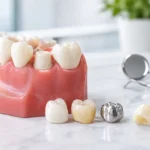
A Guide to Dental Crowns and Your Options
septiembre 16, 2026
Tipos de ortodoncia discreta: What to Know
septiembre 20, 2026
A crown is not simply a cap placed over a tooth. It is a long-term restoration that needs to handle your bite, protect weakened tooth structure, and look at home in your smile. Knowing how to choose a dental crown means looking beyond the material name and considering where the tooth is located, how you bite, your cosmetic goals, and the condition of the tooth underneath.
The right choice is personal. A crown that is ideal for a highly visible front tooth may not be the most practical option for a back molar that absorbs heavy chewing pressure. A careful consultation should give you clear options, explain the trade-offs, and help you feel confident about the plan before treatment begins.
Start With Why You Need a Crown
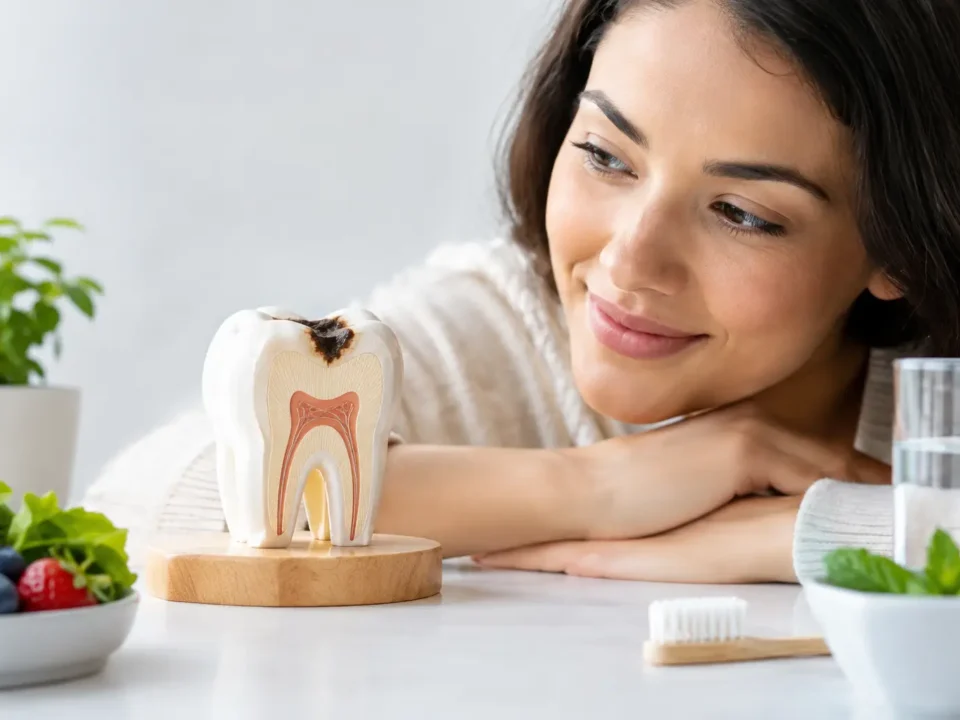
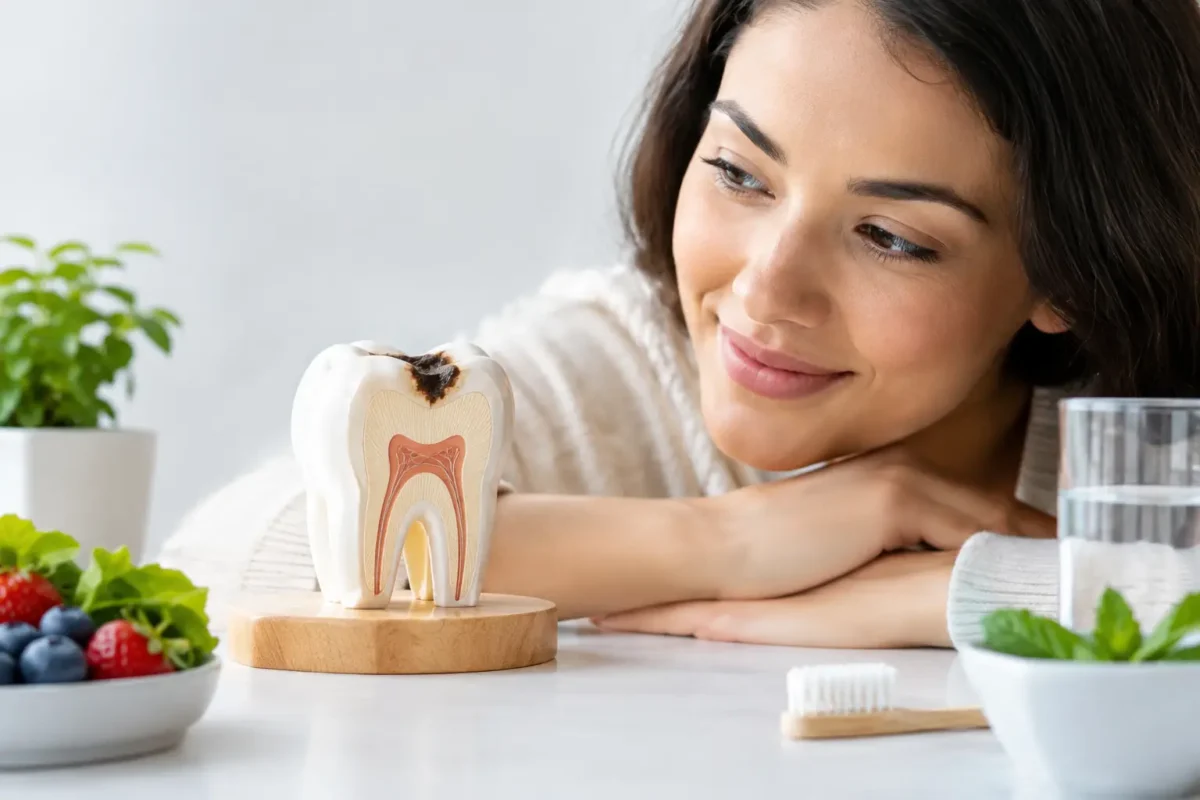
The reason for treatment shapes nearly every decision that follows. Crowns are commonly recommended after extensive decay, a large filling that no longer provides enough support, root canal treatment, tooth fracture, or significant wear. They can also restore a dental implant or improve the shape and appearance of a tooth when other treatments are not suitable.
A tooth that has lost a lot of its natural structure generally needs strength and protection first. In that case, the crown material and design must be able to withstand the forces placed on it. If the tooth is healthy but aesthetically compromised, color, translucency, and symmetry may carry more weight in the decision.
Your dentist should also assess whether a crown is truly the most conservative option. Sometimes a filling, inlay, onlay, veneer, or bonding treatment can preserve more natural tooth structure. A crown is an excellent solution when it is clinically justified, but it should not be treated as a one-size-fits-all answer.
How to Choose a Dental Crown by Tooth Location
Where the crown will sit in your mouth is one of the most useful starting points.
Front teeth: prioritize natural appearance
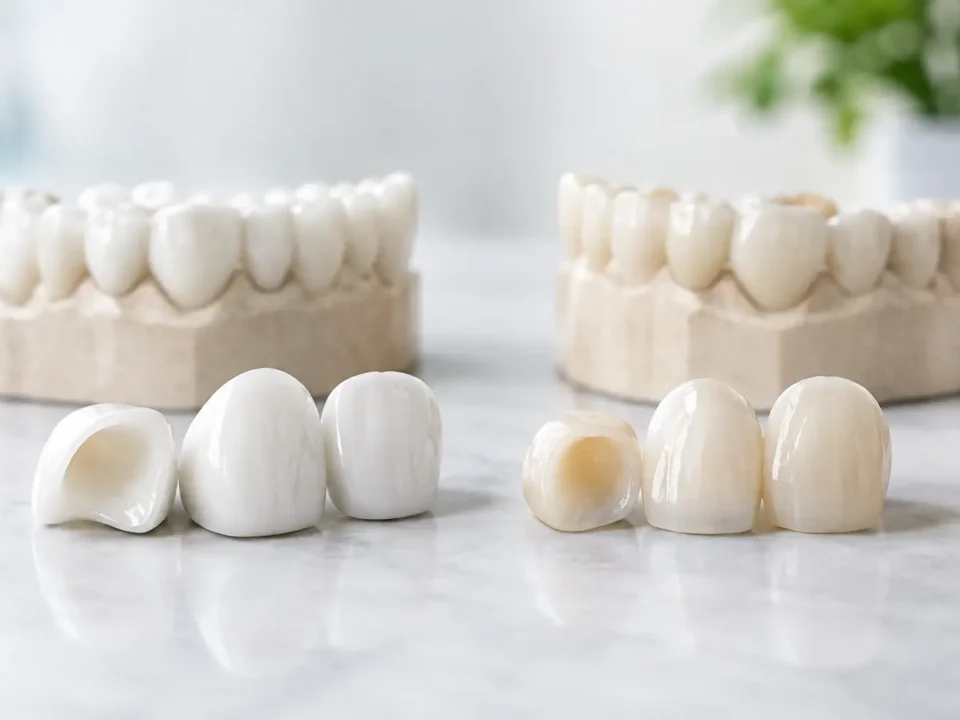
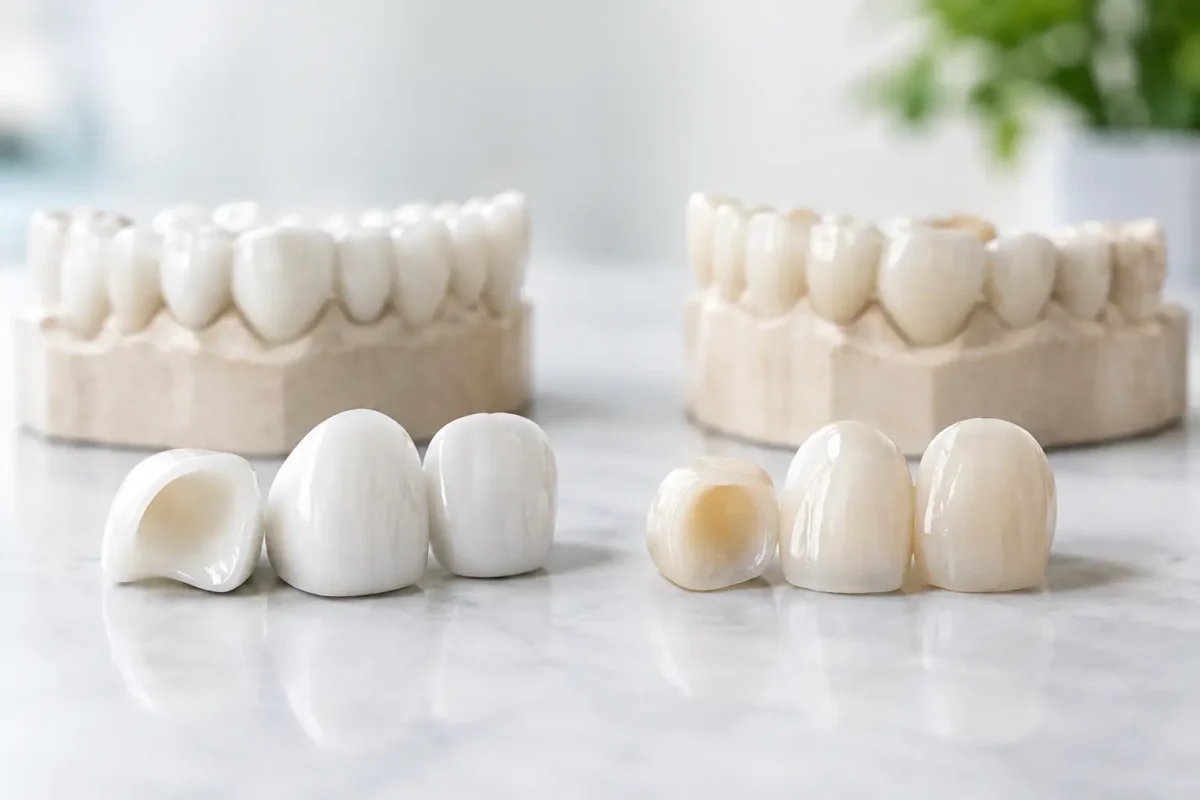
Front teeth are visible when you speak, smile, and laugh. For these teeth, all-ceramic crowns are often a strong choice because they can reflect light in a way that resembles natural enamel. High-quality ceramic can be carefully matched to neighboring teeth for color, shape, and translucency.
That does not mean appearance is the only consideration. If you grind your teeth or have a deep bite, the crown still needs sufficient strength. In these situations, your dentist may recommend a particularly durable ceramic and adjust the design to protect both the crown and the opposing teeth.
Back teeth: balance strength and appearance
Molars and premolars do most of the chewing, so they need a restoration that can tolerate repeated pressure. Zirconia crowns are often considered for these areas because they offer excellent strength while still providing a tooth-colored finish.
For a tooth that shows when you smile, a layered or more translucent ceramic may offer a more natural result. The best solution may depend on available space, the shade of surrounding teeth, and whether you clench or grind.
Understand the Main Crown Materials
Crown materials have improved significantly, and digital planning now allows for highly precise restorations. Still, every material has advantages and limitations.
Zirconia
Zirconia is a durable ceramic commonly used for posterior teeth, implant crowns, and patients with strong bites. Modern zirconia can look very natural, although some types are less translucent than other ceramics. It can be an excellent choice when strength is the priority without accepting a metallic appearance.
Lithium disilicate and other glass ceramics
These ceramics are valued for their lifelike appearance. They are often well suited to front teeth and visible premolars, where subtle color variation and light reflection matter. Depending on the clinical situation, they may also be appropriate for back teeth, but your dentist will need to assess bite forces and the amount of remaining tooth structure.
Porcelain fused to metal
A porcelain-fused-to-metal crown has a metal substructure covered by porcelain. It has a long history in restorative dentistry and can be a reliable option in certain cases. However, it may not provide the same translucency as an all-ceramic crown, and a dark line can sometimes become visible near the gumline over time, particularly if gums recede.
Full metal or gold-colored alloys
Metal crowns remain highly durable and often require less tooth reduction than some ceramic options. Their main drawback is appearance, which is why they are generally reserved for less visible back teeth. For patients who prioritize function over cosmetics in a hidden area, they can still be worth discussing.
Consider Your Bite, Habits, and Dental History
A crown does not function in isolation. It meets the opposing teeth every time you chew, and those interactions affect its longevity.
If you clench or grind your teeth, tell your dentist. Bruxism can place extraordinary force on crowns, natural teeth, and implants. A durable material may be recommended, but material alone is not the full solution. Bite adjustment and a custom night guard may be needed to reduce the risk of chipping, loosening, or damaging the teeth around the crown.
Your dental history matters as well. Gum health, decay risk, existing restorations, and prior root canal treatment can all influence treatment planning. A beautiful crown will not perform well over the long term if the gumline is inflamed, decay is left untreated, or the underlying tooth cannot provide stable support.
Ask About Fit, Preparation, and Technology
A well-designed crown should feel like part of your natural bite, not like an object you are constantly aware of. Precision matters at the crown margins, where the restoration meets the tooth. A close fit helps protect against bacterial leakage and recurrent decay, while a carefully shaped contact point helps keep food from trapping between teeth.
The treatment process usually includes preparing the tooth, taking a digital scan or impression, selecting the shade, and fitting the final crown. In suitable cases, digital design and in-clinic milling can allow a crown to be made on the same day. This can be convenient for busy professionals or visitors in Barcelona, but it is not automatically the best route for every case. Some complex aesthetic restorations benefit from additional planning and laboratory craftsmanship.
During the fitting appointment, your dentist should check the crown’s appearance, margins, contacts, and bite. Small adjustments are normal. You should be able to close comfortably, chew without a high spot, and clean around the crown effectively.
Discuss Cost Transparently, Not in Isolation
Crown costs vary based on the material, complexity of the case, laboratory work, digital technology, and any treatment needed beforehand. For example, a tooth may need decay removal, gum treatment, a build-up, or root canal treatment before it is ready for a crown.
Rather than comparing prices alone, ask what is included in the treatment plan. It is reasonable to want clarity on the crown material, temporary crown if needed, scans or X-rays, any supporting restoration, follow-up adjustments, and expected maintenance. A transparent estimate makes it easier to compare options fairly and avoid surprises.
The least expensive option is not always poor, and the most expensive option is not automatically necessary. The value lies in choosing a restoration that fits your clinical needs and is made with careful planning.
Questions Worth Asking Before You Decide
Before agreeing to treatment, ask your dentist which material they recommend and why. You may also want to ask whether there is a suitable alternative, how the crown will look beside your natural teeth, how much healthy tooth structure must be removed, and whether you will need a night guard.
It is also helpful to ask about the likely timeline. Some crowns can be completed quickly, while others require more than one appointment. If you are traveling, working around a demanding schedule, or managing treatment in a second language, clear communication at this stage can make the experience far more comfortable.
Care Helps Your Crown Last
A crown cannot decay, but the natural tooth around its edge can. Brush twice daily with fluoride toothpaste, clean between your teeth every day, and attend regular checkups and hygiene visits. If you have gum disease, dry mouth, or a high risk of cavities, consistent preventive care is especially important.
Avoid using a crowned tooth to open packaging or bite hard non-food objects. If a crown feels loose, painful, rough, or suddenly high when you bite, arrange an appointment rather than waiting for the problem to worsen.
The most reassuring choice is one made with a full view of your mouth, not just the damaged tooth. With a clear explanation, precise planning, and a crown suited to your bite and smile, you can move forward knowing your restoration is designed for everyday life.