How to Choose a Dental Crown With Confidence
septiembre 18, 2026
Barcelona Dentistry for International Patients
septiembre 22, 2026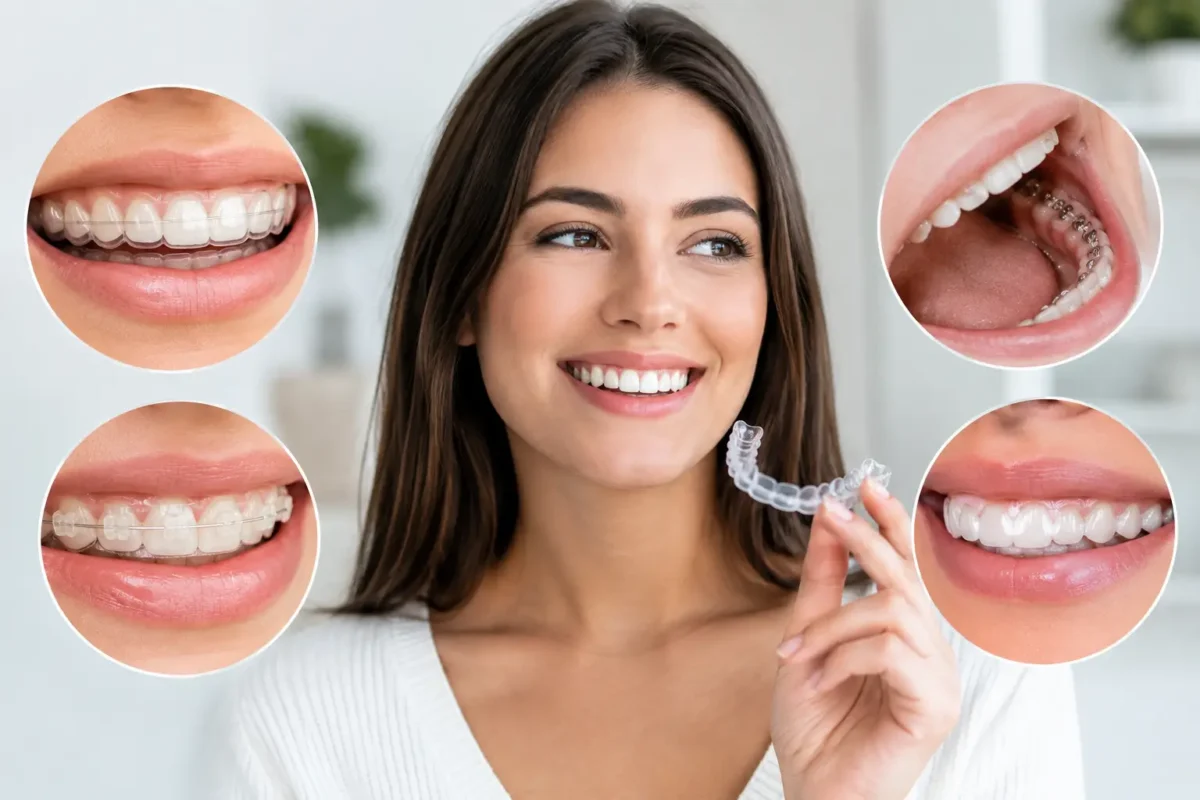
A straighter smile does not have to mean a mouth full of noticeable metal. For adults balancing meetings, social plans, travel, and daily life, the different tipos de ortodoncia discreta offer a more subtle way to correct crowding, gaps, bite concerns, and tooth alignment.
The best option is not always the least visible one. A successful orthodontic plan needs to account for the movement your teeth require, the health of your gums and jaw, your routine, and how consistently you can follow instructions. A careful assessment helps ensure that discretion does not come at the expense of a predictable, healthy result.
What does discreet orthodontics mean?
Discreet orthodontics describes treatments designed to make tooth movement less noticeable than conventional metal braces. Some systems are removable and nearly transparent. Others are fixed to the teeth but use tooth-colored materials or are placed behind the teeth.
Each approach works by applying gentle, controlled pressure over time. The visible appliance may differ, but the goal is the same: to move teeth safely into a more functional and balanced position. Treatment can improve the appearance of a smile, but it may also make cleaning easier and help distribute biting forces more evenly.
Tipos de ortodoncia discreta for adults
Clear aligners
Clear aligners are transparent, custom-made trays that fit over the teeth. A sequence of aligners is worn in a planned order, with each set making small adjustments to tooth position. They are often the first choice for patients who want an orthodontic solution that is difficult to notice in photographs, conversations, or professional settings.
Their main advantage is flexibility. Aligners are removed for meals and for brushing and flossing, so there are no food restrictions and daily oral hygiene usually feels more familiar. Digital treatment planning can also show a preview of the intended movement before treatment begins, helping patients understand the process clearly.
That flexibility also creates responsibility. Aligners generally need to be worn for around 20 to 22 hours each day. Leaving them out regularly, or forgetting to change them as instructed, can delay progress and affect the final result. They can treat many mild to complex cases, but some significant bite corrections or difficult tooth movements may be more efficiently managed with fixed braces.
Ceramic braces
Ceramic braces use brackets that closely match the natural shade of teeth. They work much like traditional braces, with brackets and a wire guiding teeth into place, but their low-contrast appearance makes them considerably less conspicuous.
For patients who prefer not to remove an appliance or are concerned about remembering to wear aligners, ceramic braces can be a very dependable option. Because they are fixed, they work continuously and can provide excellent control for a broad range of orthodontic needs.
They do require a little more care around food and cleaning. Certain hard, sticky, or very crunchy foods can damage brackets or wires, and thorough brushing around each bracket is essential. Ceramic materials are designed to resist staining, although the small elastic ties used in some cases can discolor between adjustment visits. This is usually manageable with good hygiene and regular appointments.
Lingual braces
Lingual braces are attached to the inner surfaces of the teeth, facing the tongue. From the outside, they are essentially invisible. This can make them appealing to people who want the control of fixed braces without visible brackets on the front of their smile.
Lingual orthodontics can be particularly useful for patients whose work, performance, or personal preference makes front-facing braces unsuitable. However, it is a highly specialized treatment. The appliance can initially affect speech and may feel unfamiliar against the tongue. Cleaning also takes more practice, and not every orthodontic case is an ideal candidate.
The planning and fabrication involved can make lingual braces a higher-investment option. Still, for the right patient, they offer a unique combination of discretion and fixed-appliance precision.
Combined treatment approaches
Some orthodontic plans use more than one approach. For example, fixed braces may first be used to complete a difficult movement, followed by clear aligners for refinement. In other cases, clear aligners are combined with small tooth-colored attachments, which help the trays apply the right force to specific teeth.
These attachments are visible up close, but they are generally subtle. More importantly, they can expand what aligners are able to achieve. A transparent conversation about these details at the beginning avoids the disappointment of expecting a treatment to be completely invisible when it may include small, temporary visible elements.
How to choose the right option
The right treatment is based on clinical needs first, then lifestyle preferences. A person with slight crowding who can commit to wearing trays may be an excellent clear aligner candidate. Someone with a more complex bite, or a schedule that makes consistent aligner wear difficult, may obtain a more reliable result with ceramic or lingual braces.
A consultation should include photographs, digital scans or impressions, an examination of the teeth and gums, and an assessment of your bite. Your dentist should explain what can realistically be achieved, how long treatment may take, whether any restorative work is needed beforehand, and what retention will involve afterward.
It is also worth discussing practical questions. Will you be comfortable removing aligners at restaurants or during long workdays? Do you play contact sports? Do you have frequent travel plans? Is speech adaptation a concern? These details are not minor. They help determine which appliance will feel manageable for the full course of treatment.
Treatment time, comfort, and daily care
Discreet orthodontic treatment time varies widely. Small cosmetic corrections may take several months, while more involved cases can take 18 months or longer. The complexity of the movement, your bite, and your adherence to appointments or aligner wear all affect timing.
Some pressure is normal after starting a new aligner or after a brace adjustment. This usually feels like temporary tenderness rather than sharp pain and often settles within a few days. If a wire is rubbing, an aligner edge is irritating your gums, or discomfort feels unusual, contact your dental team rather than trying to adjust the appliance yourself.
Keeping teeth and gums healthy during orthodontic treatment is essential. With aligners, brush and floss before reinserting trays, and clean the trays as instructed. With braces, use a careful brushing technique around brackets and wires, and consider interdental brushes to clean areas a standard toothbrush may miss. Regular hygiene visits can be especially valuable during treatment.
Do not overlook retention
Orthodontic treatment does not end when the teeth look straight. Teeth have a natural tendency to move over time, particularly during the first months after active treatment. Retainers hold the new positions while the surrounding tissues adapt.
Depending on your needs, retention may involve a removable clear retainer, a small fixed wire behind the front teeth, or both. Wearing retainers exactly as recommended protects the time, commitment, and financial investment you have made in your smile.
At The British Dental Clinic, patients can discuss discreet orthodontic options in clear, practical terms, with treatment planning shaped around both oral health and everyday life. The most reassuring choice is the one that you understand, can maintain, and feel comfortable wearing from the first appointment through long-term retention.