Veneers in Barcelona for a Natural-Looking Smile
agosto 21, 2026
Choosing an Orthodontist in Barcelona for Adults
agosto 25, 2026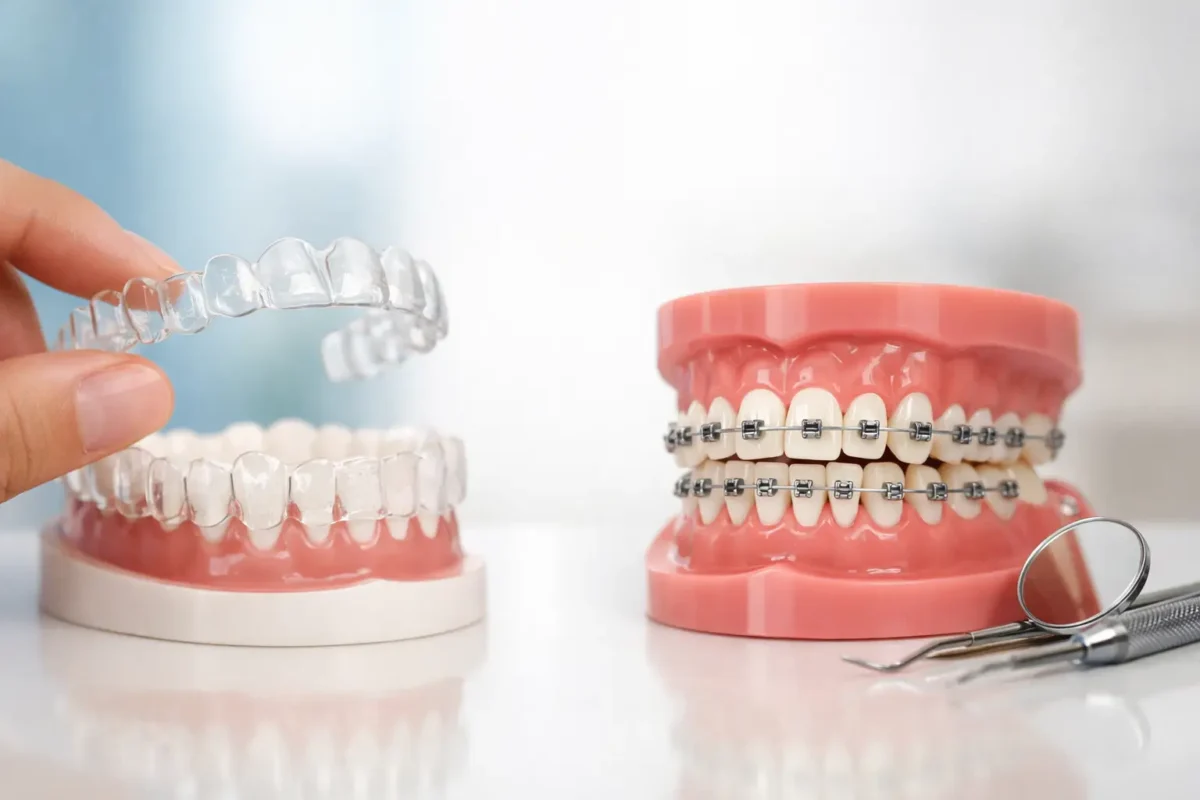
A wedding photo, a new job, or simply seeing your smile on a video call can make a long-postponed orthodontic decision feel urgent. When comparing clear aligners vs braces, the best choice is rarely about which option is universally better. It is about which treatment can safely and predictably correct your specific bite, fit your routine, and give you a result you can maintain.
Both systems move teeth through carefully planned, gentle pressure. Both can create healthier alignment and a more confident smile. The difference lies in how they work day to day, what they can treat most efficiently, and the level of commitment they require from you.
Clear aligners vs braces: the key differences
Clear aligners are removable, custom-made trays that fit closely over the teeth. You wear each set for a prescribed period before progressing to the next, gradually moving the teeth toward their planned positions. Modern digital scanning and treatment planning allow your dentist to map the movement in detail before treatment begins.
Braces use brackets fixed to the teeth and a wire that is adjusted over time. They may be metal, ceramic, or placed on the inner surfaces of the teeth in some cases. Because they remain in place, they work continuously without relying on you to remember to put them back in after meals.
The right answer often comes down to three questions: How complex is the movement needed? How much do appearance and removability matter in your everyday life? And can you reliably wear aligners for the required time each day?
Appearance and confidence during treatment
For many adults, the visual difference is the first consideration. Clear aligners are discreet and often difficult to notice in normal conversation. This can be particularly appealing for professionals who meet clients, attend presentations, or simply prefer a lower-profile treatment option.
Ceramic braces can also blend more naturally with tooth color than traditional metal braces, although the brackets and wire remain visible. Metal braces are more noticeable, but they are a proven and efficient option that many patients choose without hesitation, especially when treating more significant orthodontic concerns.
Clear does not mean invisible in every situation. Aligners may include small tooth-colored attachments that help guide more precise movements. These are subtle, but you may see them up close. Your dentist should explain whether attachments are likely to be part of your plan before treatment begins.
Comfort, speech, and everyday routines
Both aligners and braces involve an adjustment period. Teeth can feel tender for a few days after a new aligner set or a braces adjustment. That pressure is generally a sign that teeth are responding to treatment, but it should not be severe or persistent.
Aligners have smooth edges and no wires, so they tend to cause less irritation to the cheeks and lips. Some patients notice a slight lisp at first, particularly with certain sounds, but speech usually adapts quickly. Because aligners are removable, you take them out to eat, drink anything other than water, and brush and floss.
Braces are always working, but they can rub against soft tissue in the early stages or after adjustments. Orthodontic wax can help, and your dental team can address any sharp or uncomfortable areas. Food choices also need more attention. Hard, sticky, or crunchy foods can damage brackets and wires, potentially adding an unplanned repair visit to your schedule.
The commitment factor: removable versus fixed
This is where an honest conversation matters most. Clear aligners usually need to be worn around 20 to 22 hours per day. Taking them out for every coffee, snack, or meal and forgetting to replace them can slow progress. Lost trays, inconsistent wear, and skipping ahead without guidance can affect the result.
For organized patients with a predictable routine, aligners can feel straightforward. They allow normal brushing and flossing, and there are fewer food restrictions. For someone who travels often, the ability to manage treatment with a set of trays can also be convenient, provided appointments and monitoring remain on track.
Braces remove the daily decision. They stay on the teeth, making them a dependable choice for patients who know they would struggle with consistent aligner wear. They are often especially helpful for teenagers, but adults can benefit from this predictability too.
Which option handles more complex cases?
Clear aligner technology has advanced considerably. Many cases involving mild to moderate crowding, spacing, relapse after previous orthodontic treatment, and certain bite concerns can be treated very effectively with aligners. Some more complex cases can also be managed with aligners when planned carefully by an experienced clinician.
However, braces may offer more direct control for substantial tooth rotations, severe crowding, major bite discrepancies, teeth that need to be moved vertically, or cases involving impacted teeth. They can also work well when orthodontic treatment needs to coordinate closely with restorative work, such as crowns, implants, or planned tooth replacement.
This is not a limitation to hide or a reason to choose the most visible option automatically. It is a matter of choosing the appliance that gives your dentist the most reliable control. An orthodontic assessment should include photographs, digital scans, X-rays when appropriate, and a review of your gums, bone support, and overall dental health. Straightening teeth without addressing active gum disease, decay, or unstable restorations first can compromise the final result.
Treatment time and appointments
Treatment time varies far more by the complexity of your case and your cooperation than by the label on the appliance. Some limited aligner treatments may take several months. Comprehensive treatment with aligners or braces commonly takes longer, often around 12 to 24 months, though individual timelines differ.
Aligners may involve fewer in-office adjustment appointments, depending on the monitoring approach and treatment plan. Braces typically require regular visits to adjust wires and check progress. Neither should be viewed as a shortcut. Teeth need time to move safely through the bone, and careful monitoring helps protect the health of teeth and gums along the way.
It is also common to need small refinements near the end of aligner treatment. This may mean additional trays to improve a final detail. With braces, fine adjustments can similarly take time. A transparent plan explains that the estimated timeline is a guide, not a promise made before your teeth have had a chance to respond.
Cost and value beyond the initial quote
The cost of clear aligners vs braces can overlap, particularly for comprehensive treatment. The final fee depends on the complexity of the case, the estimated duration, the type of appliance, diagnostic records, monitoring needs, and whether retainers are included.
A lower starting price does not always represent lower total cost. Ask what happens if a bracket breaks, an aligner is lost, treatment takes longer than expected, or refinement trays are needed. You should also ask whether retainers, follow-up reviews, and any necessary replacement retainers are included or priced separately.
At The British Dental Clinic, clear treatment planning means discussing the recommended approach, expected fees, and practical alternatives before you commit. For international patients in Barcelona, that clarity can be particularly valuable when arranging visits around work, travel, or family commitments.
Retainers are not optional
Whether you choose braces or aligners, the final step is retention. Teeth naturally have a tendency to shift after orthodontic treatment, especially during the first months and years. A retainer holds the new positions while the surrounding tissues adapt.
Your dentist may recommend a removable retainer, a fixed retainer bonded behind the front teeth, or a combination of both. Wearing retainers exactly as advised is the best way to protect the time, investment, and care that went into your new smile.
How to make the decision with confidence
Bring your priorities to the consultation. If discretion and removability are central to your life, ask whether aligners can achieve your treatment goals without compromising predictability. If your case is more complex or you would prefer an appliance that works full-time without daily discipline, braces may be the stronger option.
The most reassuring plan is one that explains not only what you will wear, but why it is being recommended, how long it is likely to take, what is included, and how your result will be maintained. A healthy, well-aligned smile is not about choosing the trendiest appliance. It is about choosing a treatment you can follow confidently from the first scan to your final retainer check.