How Adults Can Prevent Cavities Every Day
agosto 15, 2026
A Clear Guide to Gum Treatment and Health
agosto 19, 2026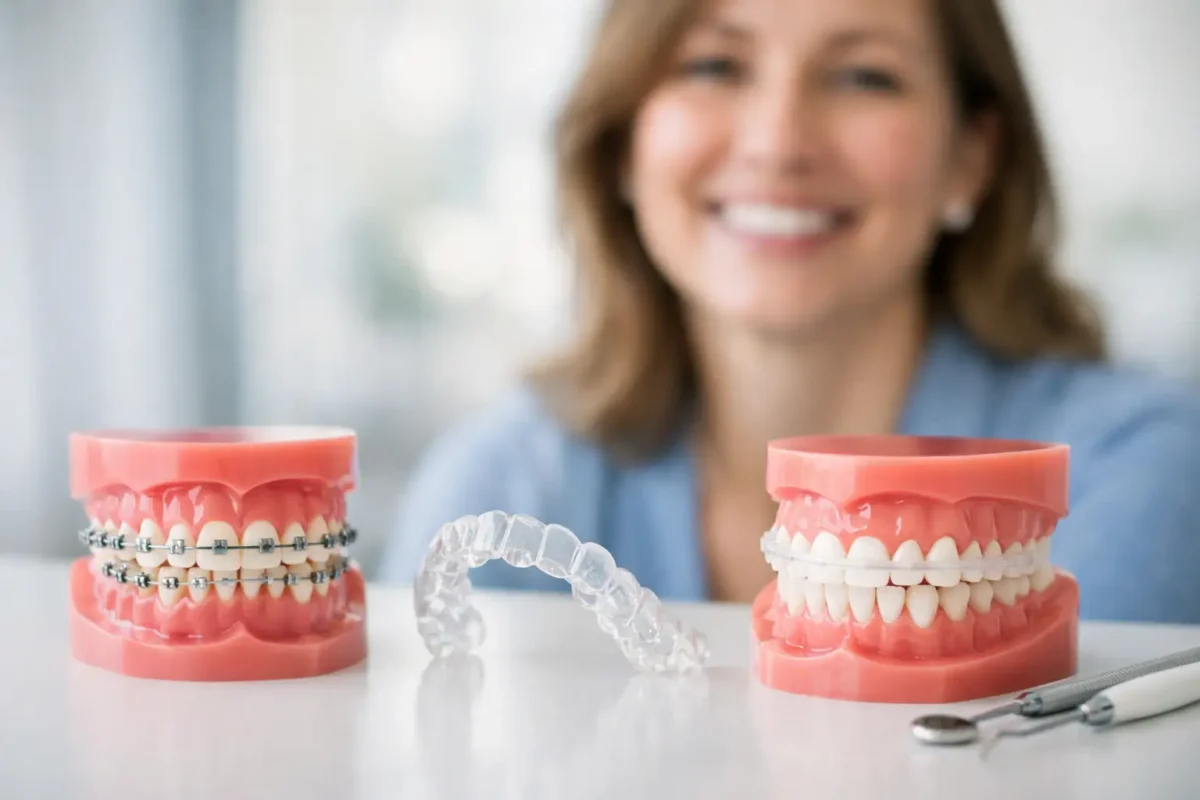
A crowded lower front tooth, a gap that shows in photos, or a bite that makes chewing uncomfortable can feel more noticeable in adulthood than it did years ago. The best orthodontic options for adults are not simply the least visible ones. The right choice depends on what needs to move, how your teeth and gums are functioning, your schedule, and how much day-to-day flexibility you need.
Adult orthodontic treatment is more common than ever, and it is not limited to cosmetic changes. Correcting alignment can make teeth easier to clean, reduce uneven wear, and improve how the bite comes together. A careful assessment is the starting point because adult teeth can move very successfully, but they need a treatment plan that accounts for restorations, gum health, and the way your jaws function.
Best Orthodontic Options for Adults: What to Consider First
Before choosing an appliance, your dentist or orthodontist should look beyond the visible position of your teeth. Digital scans, photographs, X-rays, and a bite assessment help identify whether the concern is straightforward crowding or spacing, or a more complex issue involving the bite, jaw position, gum recession, or tooth wear.
Adults often have crowns, veneers, fillings, implants, or a history of gum treatment. These do not automatically rule out orthodontics, but they can affect the plan. Natural teeth can be moved with orthodontic treatment; implants cannot. If an implant is already present, it may serve as a fixed point while neighboring teeth are moved around it. Crowns and veneers may also require special care when attachments or brackets are placed and removed.
Your personal priorities matter as well. Someone preparing for a wedding or public-facing role may place discretion first. A person with a significant bite concern may benefit most from the control of fixed braces. Clear communication about treatment length, costs, required appointments, and retention makes it much easier to make a confident decision.
Clear Aligners: Discreet and Flexible
Clear aligners are removable, custom-made trays that guide teeth through a sequence of small movements. They are popular with adults because they are subtle, smooth, and can be removed for meals, brushing, flossing, and important occasions.
For mild to moderate crowding, spacing, and certain bite corrections, aligners can be an excellent option. They are particularly practical for people who want to keep their usual oral hygiene routine and avoid dietary restrictions. There are no brackets or wires to catch food, and the trays can be removed before eating.
The trade-off is consistency. Aligners generally need to be worn for around 20 to 22 hours a day. Taking them out frequently or forgetting to put them back in can slow progress and reduce predictability. Some movements also require small tooth-colored attachments, which give the aligners better grip. They are discreet, but not always completely invisible at close range.
Clear aligners may not be the ideal choice for every complex bite, severely rotated tooth, or movement that needs particularly precise force control. In some cases, they can still work very well with additional techniques, but this should be discussed honestly before treatment begins.
Ceramic Braces: Reliable Treatment With a Softer Look
Ceramic braces work in the same way as traditional fixed braces, but their brackets are tooth-colored or clear. They offer a less noticeable appearance while providing the dependable control of brackets and wires.
This makes ceramic braces a strong middle ground for adults who want a discreet treatment option but have movements that are less suitable for removable aligners. Because braces stay in place, they work continuously without relying on daily wear habits. For patients who know they may struggle to wear aligners consistently, that can be a real advantage.
Ceramic brackets can be slightly more delicate than metal brackets and may require careful cleaning to prevent staining around the brackets. Some foods should also be avoided to reduce the risk of damaging the appliance. Still, for many adults, the balance of appearance and precision makes ceramic braces a very appealing choice.
Metal Braces: The Most Visible, Not the Least Effective
Metal braces remain one of the most capable and efficient orthodontic tools available. Modern brackets are smaller and more comfortable than many people remember, and they can be highly effective for complex crowding, significant rotations, bite discrepancies, and teeth that need more controlled movement.
Their main disadvantage is visibility. For some adults, that is an immediate reason to look elsewhere. For others, the predictable control and often lower cost make metal braces the sensible option. They can also be a practical choice when treatment requires movements that would be slower or less predictable with aligners.
Fixed braces require a little more attention to oral hygiene. Brushing around brackets and under wires takes time, and small interdental brushes or water flossers can be helpful. Regular hygiene visits are especially valuable during treatment, since healthy gums are essential for moving teeth safely.
Lingual Braces: Hidden Behind the Teeth
Lingual braces are fixed braces placed on the inside surfaces of the teeth, making them invisible from the outside. They can be an attractive solution for adults who need the control of braces but do not want brackets visible in professional or social settings.
They are not right for everyone. Lingual braces can initially affect speech and may feel more noticeable to the tongue than front-facing braces. They are also more technique-sensitive, can be more difficult to clean, and are often a higher-cost option. Treatment and adjustment appointments may take longer, depending on the case.
For the right patient, however, lingual braces provide a meaningful benefit: a fully hidden appliance that is working at all times. They are worth discussing if privacy is a priority and you are comfortable with a short adaptation period.
Short-Term Cosmetic Orthodontics: When It Can Help, and When It Cannot
Some treatments focus mainly on the front teeth to improve visible crowding or spacing over a shorter period. This can be appropriate when the bite is stable and the concern is truly limited to minor cosmetic alignment.
It is not a substitute for comprehensive orthodontic care when the bite needs correction. Moving only the visible teeth without considering how the upper and lower teeth meet can create compromises that are not ideal for long-term function. A good clinician will explain whether short-term treatment is a sensible, conservative option or whether a full plan would protect your oral health and result better.
How Long Does Adult Orthodontic Treatment Take?
Treatment time varies more by complexity and consistency than by age alone. Minor alignment concerns may be addressed in as little as six to nine months. Many comprehensive adult cases take 12 to 24 months, while more complex bite correction can take longer.
With aligners, wearing the trays as instructed has a direct impact on progress. With braces, keeping adjustment appointments and avoiding broken brackets or wires helps prevent delays. Your treatment plan should include realistic timing, not a promise built around an idealized case.
The final stage matters just as much as active treatment. Teeth have a natural tendency to shift over time, particularly in the lower front teeth. Retainers help protect the investment you have made. Depending on your needs, this may include a removable retainer worn at night, a fixed retainer bonded behind certain teeth, or both.
Questions to Ask Before Choosing Treatment
A consultation should leave you with clear answers, not pressure. Ask what each option can realistically achieve in your case, what compromises may be involved, and whether additional dental care is needed before orthodontics begins. If you have gum bleeding, untreated decay, or an unstable crown, those issues should usually be addressed first.
It is also sensible to ask how often you will need appointments, what happens if an aligner is lost or a bracket breaks, and whether retainers are included in the treatment fee. For international patients or busy professionals in Barcelona, clear scheduling and an explanation in a familiar language can make a long-term treatment plan feel far more manageable.
The best choice is the one that balances clinical suitability with your real life. At The British Dental Clinic, a personalized orthodontic consultation can clarify the movements your smile needs, the options that fit your preferences, and the steps required to keep your teeth healthy throughout treatment. A well-chosen appliance is not just about straighter teeth – it is about feeling informed and comfortable from the first scan to the day you smile without thinking twice.