Como Funciona Implante Guiado?
junio 11, 2026
Airflow vs Limpieza: Which Cleans Better?
junio 13, 2026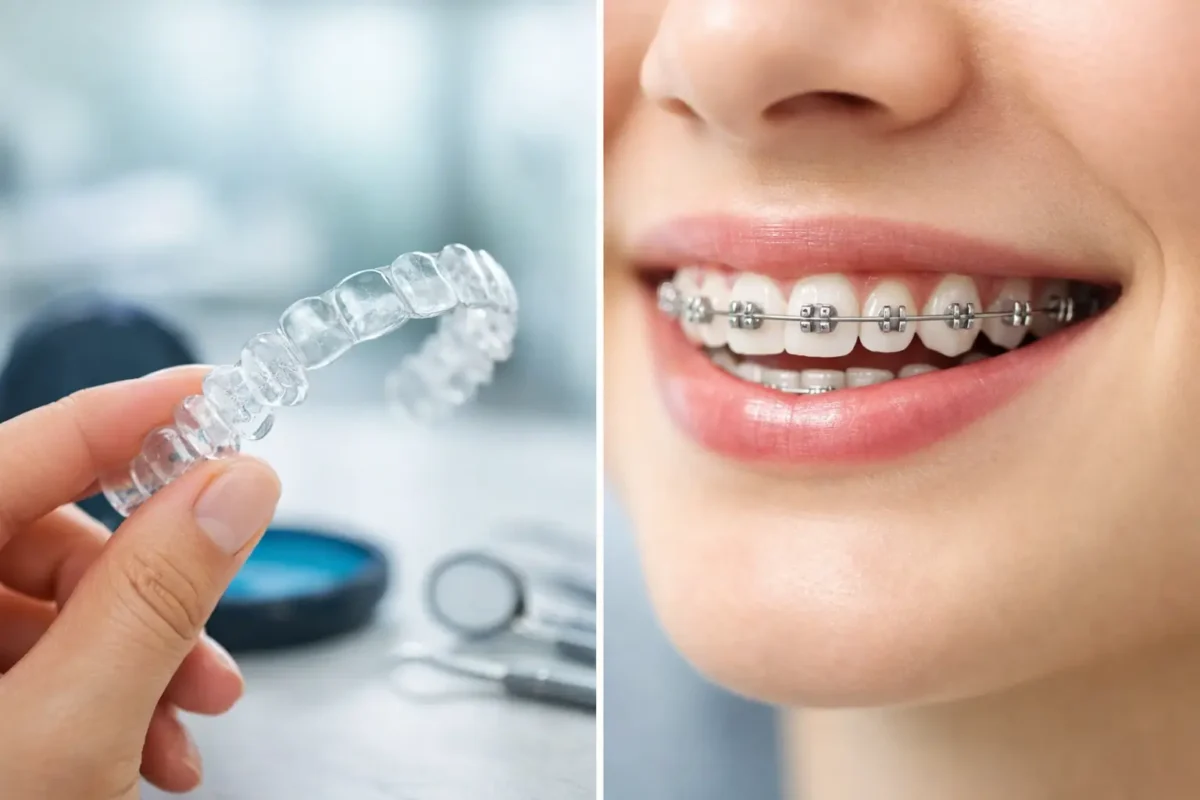
If you have been told you need orthodontic treatment, the real question usually arrives a few seconds later: invisalign o brackets? It is a practical decision, but it can also feel personal. You are not only choosing how your teeth will move. You are choosing what treatment will feel like during work meetings, dinners out, travel, photos, and everyday life.
For many adults, especially those balancing busy schedules and professional visibility, the right option is not simply the most discreet one. It is the one that fits your bite, your priorities, and your willingness to follow the plan. That is where a clear comparison matters.
Invisalign o brackets: the main difference
Invisalign uses a series of clear, removable aligners that gradually shift the teeth. Brackets, often called braces, use fixed attachments and wires to apply steady pressure over time. Both can deliver excellent results, but they work in different ways and ask different things from the patient.
The biggest practical difference is control. With brackets, the appliance stays on your teeth and keeps working all day. With Invisalign, the aligners only work as intended if they are worn consistently, usually around 20 to 22 hours a day. That makes Invisalign more flexible, but it also makes patient commitment a bigger part of treatment success.
When Invisalign is a strong choice
Invisalign appeals to adults for obvious reasons. The aligners are clear, removable, and generally less noticeable in social and professional settings. If you speak often for work, attend events, or simply prefer a more discreet option, this can be a major advantage.
Comfort is another reason many patients lean toward aligners. There are no wires or brackets rubbing against the inside of the cheeks, and most people find the pressure manageable, especially after the first days of a new tray. Eating is also simpler because you remove the aligners at meals, so there are no food restrictions in the usual sense.
Oral hygiene tends to be easier too. You can brush and floss normally, which is helpful if you are already investing in your long-term dental health. For adults with mild to moderate crowding, spacing, or relapse after previous orthodontic treatment, Invisalign can be a very effective and convenient option.
That said, convenience has a condition attached. If you often forget things, snack frequently throughout the day, or know you may not wear the trays for the recommended hours, Invisalign may become frustrating. The treatment can only be as consistent as the habits behind it.
Invisalign works best for patients who want freedom
Freedom is the main selling point, but it cuts both ways. Being able to remove aligners for meals, presentations, or special occasions is helpful. Having to put them back every time is the trade-off.
Some patients love that sense of control. Others find that fixed treatment removes the mental effort. Neither reaction is wrong. It depends on your lifestyle and personality just as much as your clinical needs.
When brackets may be the better option
Brackets remain one of the most reliable orthodontic tools for a reason. They are fixed in place, highly precise, and often better suited to more complex tooth movements or bite corrections. If teeth need significant rotation, vertical movement, or broader jaw and bite adjustments, braces may give the orthodontist more control.
They are also useful for patients who do not want the responsibility of removable trays. Once brackets are placed, treatment continues around the clock. You do not need to remember to wear them, and there is less room for delays caused by inconsistent compliance.
For teenagers and adults with more complicated orthodontic needs, braces can sometimes produce more predictable results. They may also be more cost-effective in certain cases, although pricing varies depending on complexity, treatment length, and the type of brackets used.
The downside is visibility and maintenance. Traditional metal braces are more noticeable, and even ceramic options are still visible at close range. Food can get trapped more easily, cleaning takes more effort, and emergency visits for broken brackets or poking wires can occasionally happen.
Brackets can be better for complex cases
This is where the comparison becomes less about preference and more about biology. Not every smile can be treated equally well with every system. Some patients start out hoping for aligners and later learn that brackets are the more efficient or stable option.
A good orthodontic assessment should explain why. You should understand whether the recommendation is based on effectiveness, treatment time, long-term stability, or a mix of all three.
Comfort, appearance, and daily life
From a lifestyle perspective, Invisalign usually wins on appearance and flexibility. Most people will not notice the aligners unless they are looking closely. For adults who feel self-conscious about braces, that can make a real difference in confidence.
Brackets, however, often require less day-to-day discipline. You adapt to them, rather than managing them. There is usually an adjustment period with some soreness, especially after tightening appointments, but that is also true with aligners when switching trays.
Speech can be affected slightly with either option at first. With Invisalign, some people notice a temporary lisp for a few days. With brackets, the bulk of the appliance can feel unfamiliar. In both cases, most patients adjust quickly.
Eating is where the experience differs most. Invisalign allows you to eat what you like as long as the trays are removed. Brackets come with restrictions on hard, sticky, or crunchy foods that might damage the appliance. If you travel often, eat out frequently, or prefer fewer food rules, aligners can feel much easier.
Cost and treatment time
Many patients want a simple price answer, but orthodontic fees are case-dependent. Mild alignment issues are not priced the same way as complex bite correction, whether you choose aligners or braces. In some cases, Invisalign costs slightly more because of the digital planning and custom tray series. In others, the difference is modest.
Treatment time also varies. Some Invisalign cases move quickly, especially minor cosmetic corrections. Some brace cases are faster for more complex movements because fixed appliances allow stronger control. A treatment that looks cheaper at the start may become more expensive if delays, refinements, or poor compliance extend the process.
That is why transparency matters. A proper consultation should explain not only the fee, but what is included, how long treatment is likely to take, and what could change that timeline.
How to decide between Invisalign and brackets
The best decision usually comes from combining clinical reality with personal priorities. Start with the orthodontic question: which option can safely and effectively treat your case? Then consider the human side: what will you realistically wear, maintain, and stick with for months or years?
If appearance, removability, and easier brushing matter most, Invisalign may be the better fit. If you want maximum control, less reliance on self-discipline, or your case is more complex, brackets may be the smarter choice.
This is also why adult patients benefit from clear, personalized treatment planning. A good clinic will not push one system for everyone. It will explain what each option can achieve in your specific case, where the trade-offs are, and what kind of daily commitment is required. For many international patients seeking orthodontic care in Barcelona, that level of explanation can make the decision feel much less overwhelming.
The best option is the one you can finish well
Orthodontic treatment is not only about starting. It is about finishing with healthy, stable results. A nearly invisible system is not better if it does not suit your habits. A fixed appliance is not automatically better if a simpler aligner plan would meet your goals with less disruption.
The right answer to invisalign o brackets is often more nuanced than patients expect, and that is a good thing. It means your treatment should be tailored, not standardized. When you understand the reasons behind the recommendation, choosing becomes easier and far more reassuring.
If you are considering orthodontic treatment, look for a consultation that gives you honest guidance, clear costs, and a plan built around both your smile and your life.