How to Treat Gum Recession Effectively
junio 30, 2026
A Clear Guide to Dental Implant Healing
julio 4, 2026
A brighter smile should not come at the cost of enamel damage or painful sensitivity. If you are wondering how to whiten teeth safely, the key is not choosing the strongest product you can find. It is choosing the right method for your teeth, your existing dental health, and the kind of result you actually want.
Teeth whitening can work very well, but it is not one-size-fits-all. The safest approach depends on why your teeth look darker, whether you have fillings or crowns in visible areas, and whether you already deal with sensitivity, gum recession, or untreated decay. That is why good whitening starts with a clear assessment, not just a product label.
How to whiten teeth safely starts with the cause
Not all stains respond the same way. Some are external, caused by coffee, tea, red wine, tobacco, or simply a buildup of surface staining over time. These are often the easiest to improve. Others are deeper and sit within the tooth structure. Aging, certain medications, dental trauma, and natural variation in enamel thickness can all affect tooth shade.
This distinction matters because whitening toothpastes, whitening strips, custom trays, and in-office whitening each work differently. A product that helps with mild surface discoloration may do very little for deeper staining. When people keep increasing strength or frequency because they are not seeing results, that is when irritation and sensitivity often begin.
A professional exam is useful before whitening because it can identify issues that make treatment less predictable or less safe. Cavities, worn enamel, cracked teeth, leaking fillings, and gum inflammation should be addressed first. Whitening over those problems does not fix them, and in some cases it can make discomfort worse.
The safest whitening options for most adults
Professional whitening remains the most controlled option because it is based on your mouth rather than a generic formula. This usually takes one of two forms: in-office whitening performed under dental supervision, or take-home whitening with custom trays and professional-grade gel.
In-office whitening is often the fastest route. It can deliver a noticeable improvement in a single visit and allows the dental team to protect the gums carefully and monitor your comfort throughout treatment. It is a good choice for people who want visible results quickly or who prefer treatment in a clinical setting.
Custom take-home trays offer a different advantage. They fit your teeth precisely, which helps the whitening gel stay where it should and reduces the chance of irritating the gums. For many patients, this is an excellent balance between convenience, safety, and gradual, natural-looking results.
Over-the-counter products can also be appropriate in some cases, but they are not equal in quality or fit. Whitening strips may help with mild to moderate staining, though they do not always reach every surface evenly. One-size-fits-all trays can be more problematic because excess gel can spill onto the gums. Whitening toothpastes may remove some surface stain, but they do not usually change the intrinsic color of the teeth to a dramatic degree.
What ingredients actually whiten teeth
Most effective whitening products rely on either hydrogen peroxide or carbamide peroxide. These ingredients break down stain molecules so the teeth appear lighter. Used correctly, they can be safe and effective. Used too often, at too high a concentration, or on unhealthy teeth, they can lead to sensitivity and soft tissue irritation.
This is where people often get misled by marketing. Charcoal powders, abrasive pastes, lemon juice, baking soda scrubs, and various homemade remedies are often promoted as natural whitening solutions. The problem is that many of them do not truly whiten teeth in a controlled way. Instead, they may scrub the surface, temporarily remove superficial stain, or create the illusion of brightness while gradually wearing enamel.
Once enamel is lost, it does not grow back. Safer whitening should preserve tooth structure, not grind it away.
Common mistakes when trying to whiten teeth
The biggest mistake is assuming that more is better. Leaving strips on longer than directed, using whitening gel more often than instructed, or combining several whitening products at once can increase sensitivity without improving the outcome.
Another common issue is whitening without a recent dental cleaning. If plaque and tartar are present, the result may look uneven. Many people get a better and more accurate result when whitening is done after a hygiene appointment.
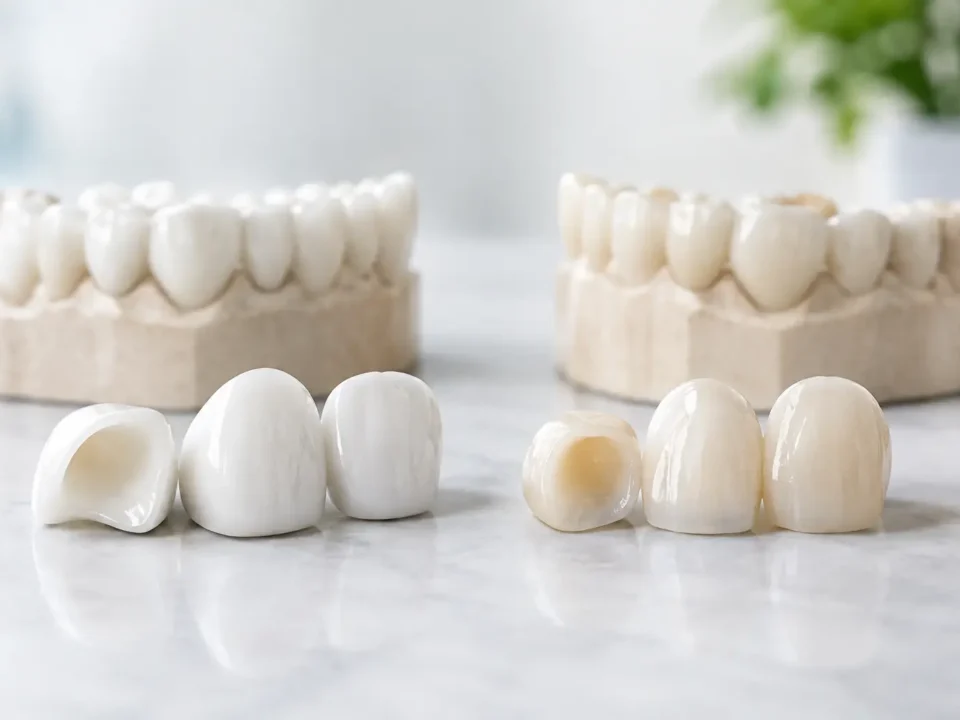
There is also the question of existing dental work. Fillings, crowns, veneers, and bonding do not whiten in the same way natural teeth do. If these restorations are visible when you smile, whitening your natural teeth may create a mismatch. In those cases, treatment planning matters. Sometimes whitening is still worthwhile, but it may need to be followed by replacing older restorations to achieve a balanced result.
How to whiten teeth safely if you have sensitive teeth
Sensitivity does not always mean you cannot whiten, but it does mean the method should be chosen more carefully. People with naturally sensitive teeth often do better with lower-concentration gels used over a longer period, rather than a very intense whitening session all at once.
Spacing treatments out can help. So can using desensitizing toothpaste before and during whitening. In some cases, your dentist may recommend a short-contact protocol or a tailored schedule based on your response.
If you already have sharp pain from cold drinks, visible gum recession, or discomfort from brushing, those symptoms should be evaluated before whitening begins. Whitening can highlight underlying problems that were already there. Treating the cause first usually leads to a more comfortable and more successful result.
When whitening is not the right answer
Some discoloration will not respond well to standard whitening alone. Teeth darkened by trauma, certain antibiotics, fluorosis, or developmental changes may improve only partially. That does not mean you are out of options, but it does mean expectations should be realistic.
For some patients, cosmetic bonding or veneers may provide a more predictable improvement than repeated whitening. This is especially true when the issue is not just shade but also shape, uneven edges, or patchy discoloration. A trustworthy dental clinic should explain that whitening is one tool, not the answer to every cosmetic concern.
Pregnancy, active gum disease, untreated cavities, and significant enamel wear are also situations where whitening may need to be postponed. Safe treatment sometimes means waiting until the mouth is healthier.
How long do results last?
That depends on your habits, your starting shade, and the whitening method used. For many patients, results can last from several months to a couple of years with sensible maintenance. Coffee, tea, red wine, smoking, and inconsistent hygiene will shorten that timeline.
Maintenance does not have to mean constant whitening. Often it is enough to keep up with regular hygiene visits, use a non-abrasive toothpaste, and do occasional touch-ups only when needed. The goal is to maintain a healthy, natural-looking brightness rather than chase an artificial white that is difficult to sustain.
Choosing professional whitening with confidence
For international patients and busy professionals, one of the biggest frustrations around cosmetic dentistry is uncertainty. They want to know what is safe, what result is realistic, and what the process will feel like before committing. That is where a clear consultation makes a real difference.
At a clinic such as The British Dental Clinic, whitening should feel straightforward rather than sales-driven. You should understand whether your teeth are suitable, what type of whitening is recommended, how sensitivity will be managed, and whether any visible restorations may affect the final look. Good cosmetic care is not just about brighter teeth. It is about making informed decisions with confidence.
How to get the best result without harming your teeth
The safest whitening plan is usually the one built around your mouth, not around advertising claims. Start with an exam and cleaning if needed. Choose a whitening method that matches your level of staining and sensitivity. Follow instructions exactly. Avoid abrasive DIY shortcuts. And if something feels painful rather than mildly sensitive, stop and get advice.
A brighter smile should still look like your smile, just fresher, healthier, and more confident. When whitening is done properly, that is exactly what it delivers.