Composite Bonding vs Veneers: Which Fits You?
julio 26, 2026
Cuando necesito endodoncia dental: key signs
julio 30, 2026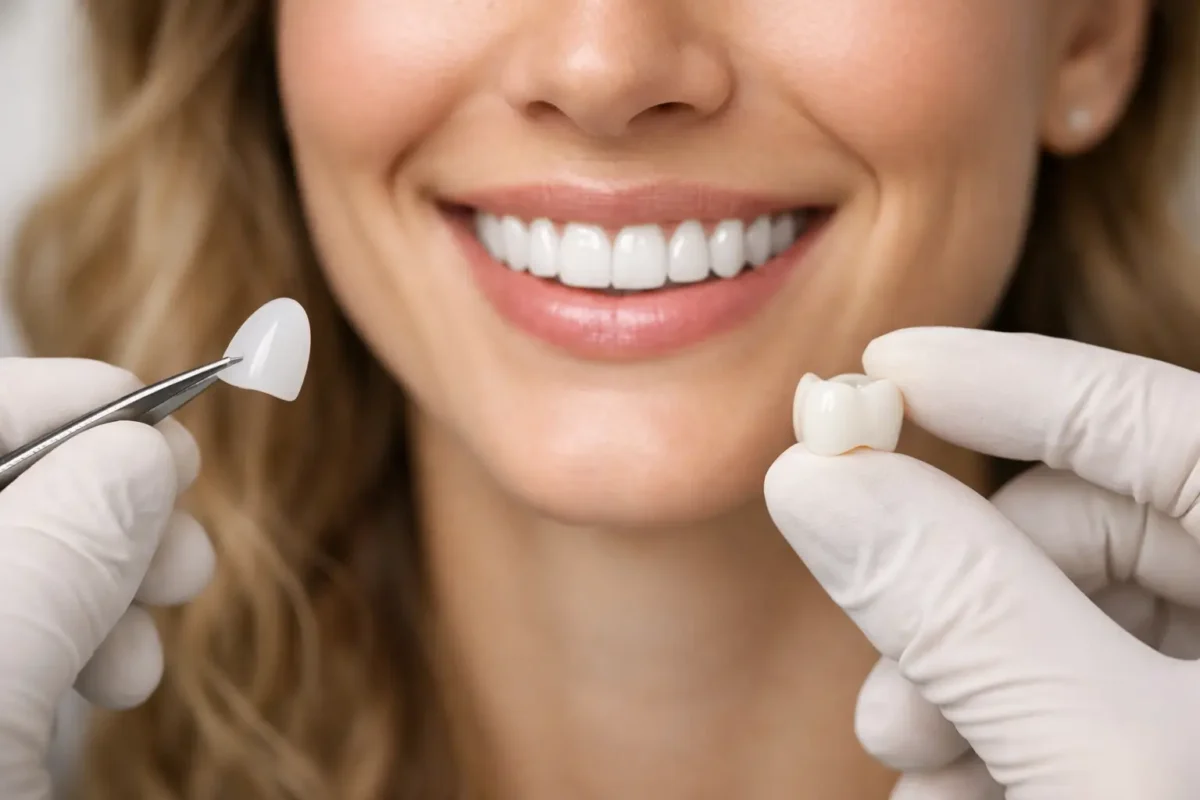
A small chip on a front tooth can make you hide your smile in photos. A tooth that has cracked after root canal treatment raises a different concern: will it hold up when you chew? Although both treatments can improve the appearance of a tooth, the choice between carillas o coronas – veneers or crowns – depends first on what the tooth needs to stay healthy and functional.
Veneers are usually chosen when the tooth is fundamentally sound and the goal is to improve its visible surface. Crowns are designed for teeth that need more complete protection. The right option should never be based on appearance alone. A careful examination, photographs, and digital scans help determine how much healthy tooth structure remains, how your bite works, and what result can be expected over time.
Carillas o coronas: the key difference
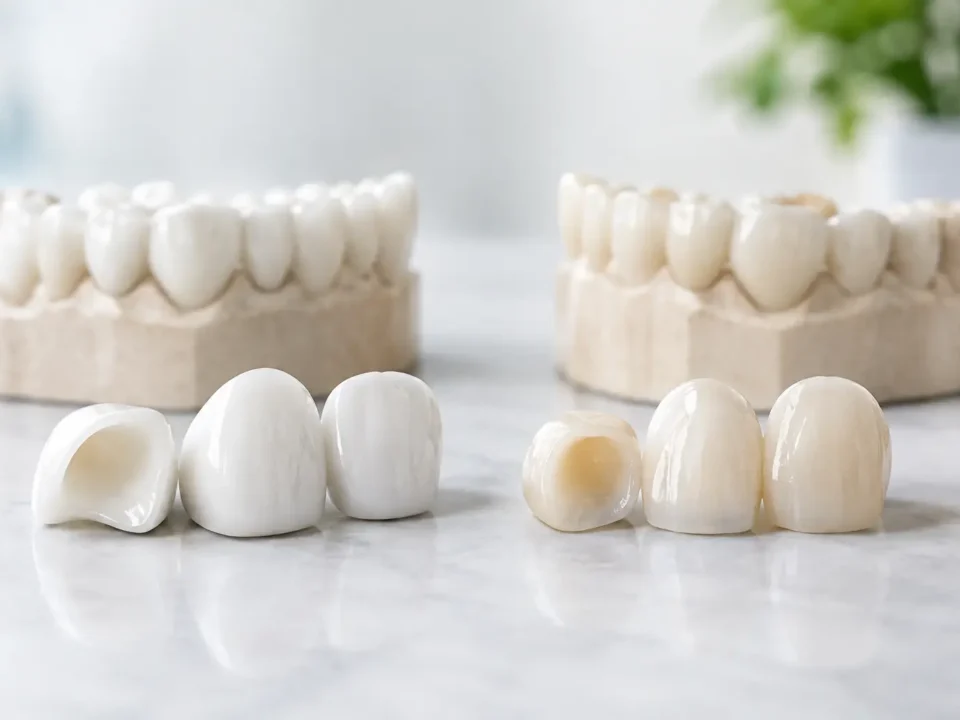
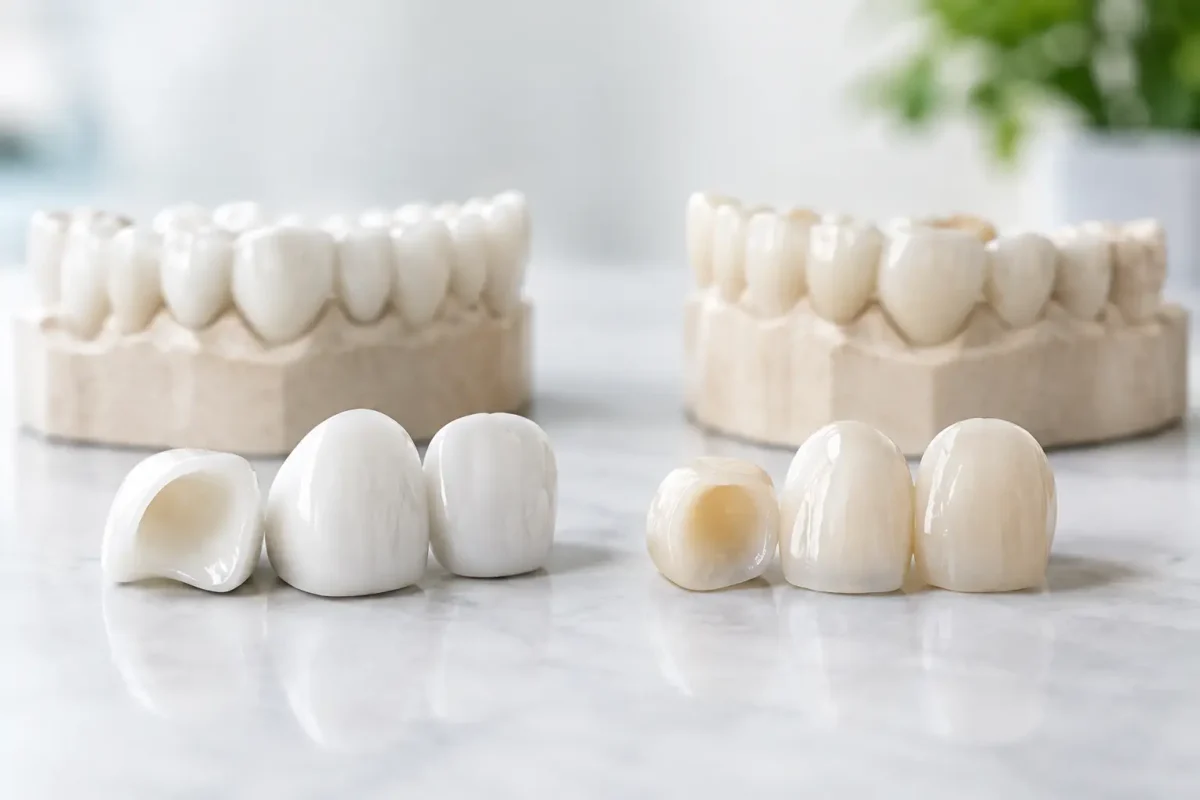
A veneer is a thin, custom-made shell bonded to the front of a tooth. It can improve the color, shape, length, or minor alignment of visible teeth. Modern porcelain veneers are highly natural-looking because they reflect light in a way that is similar to enamel. In suitable cases, they require only minimal preparation of the tooth.
A crown covers the entire visible portion of a tooth, like a precisely fitted protective cap. It is recommended when a tooth has extensive decay, a large old filling, a fracture, significant wear, or has been weakened by root canal treatment. Crowns can also be used to restore dental implants. Their primary role is strength, although high-quality ceramic crowns can also look exceptionally natural.
Put simply, a veneer changes the face of a healthy or mostly healthy tooth. A crown rebuilds and protects a tooth that has lost too much structure to be dependable on its own.
When veneers are the better choice
Veneers are often an excellent option for patients who want a refined, balanced smile without orthodontic treatment or extensive restorative work. They may address stubborn staining that does not respond well to whitening, small gaps, uneven edges, mild chips, or teeth that appear slightly short or irregular.
The best veneer candidates have healthy gums, stable oral hygiene, and enough enamel for reliable bonding. This last point matters. Bonding to enamel is generally more predictable than bonding to dentin, the layer beneath it. If a tooth already has a very large filling or little remaining enamel, a veneer may not offer the support it needs.
Veneers also require thoughtful smile planning. Changing one front tooth is possible, but matching color and translucency to neighboring teeth takes skill. When several teeth are being treated, the dentist can plan proportions, tooth shape, and shade across the smile. A digital preview or mock-up can make those decisions easier before the final restorations are made.
When a crown is the safer option
A crown is usually the more conservative choice when leaving the tooth exposed would create a higher risk of fracture. This can feel counterintuitive because a crown covers more of the tooth than a veneer. Yet preserving a weakened tooth for the long term sometimes means giving it full coverage rather than placing a purely cosmetic restoration over a compromised foundation.
For example, a back tooth with a large filling and cracked cusps is under substantial pressure every day. A crown can hold the remaining tooth together and restore its chewing surface. A front tooth that has darkened after root canal treatment, lost a large amount of structure, or suffered trauma may also need a crown for both strength and appearance.
Crowns are made from different materials, including strong all-ceramic options, zirconia, and porcelain fused to other materials. The ideal choice depends on the location of the tooth, bite forces, desired appearance, and the amount of available space. Front teeth often benefit from materials selected for their lifelike translucency, while back teeth may need an emphasis on strength.
The role of tooth preparation
Both veneers and crowns usually involve some tooth preparation, but the amount is very different. A veneer may require only a small reduction of enamel on the front surface, and in selected cases very little or no preparation may be needed. However, no-prep veneers are not appropriate for everyone. If added without adequate planning, they can make teeth look bulky or affect the gumline.
A crown requires more space because it covers every side of the tooth. The dentist reshapes the tooth carefully to create room for the restorative material while retaining as much healthy structure as possible. If decay or an old restoration needs to be removed first, the tooth may need to be rebuilt before the crown is placed.
Neither treatment is something to choose casually. Once a tooth has been prepared for a conventional veneer or crown, it will generally need a restoration in the future. This is why a responsible consultation considers alternatives, including whitening, composite bonding, orthodontics, or replacing an old filling when these can meet the patient’s goals with less intervention.
Appearance, comfort, and longevity
Well-designed veneers and crowns should feel like part of your natural smile, not like an artificial addition. The final result depends on more than the ceramic itself. Gum health, tooth proportions, bite alignment, color selection, and the quality of the laboratory work all influence the outcome.
Veneers can last many years with good care, particularly when they are bonded to healthy enamel and protected from excessive biting forces. Crowns are also long-lasting, but their lifespan depends on the condition of the underlying tooth, the fit of the restoration, oral hygiene, and daily habits. Neither is permanent, and both may eventually need repair or replacement.
Grinding or clenching deserves particular attention. These habits can chip ceramics, loosen restorations, and place strain on natural teeth. If you grind your teeth at night, a custom night guard may be recommended after treatment. It is a small step that can protect a significant investment in your oral health.
Cost should reflect the treatment, not drive it
It is understandable to compare costs, especially when several front teeth are involved. But a lower-cost cosmetic solution can become more expensive if it fails because it was placed on a tooth that actually needed structural support. Conversely, placing crowns on teeth that only need minor cosmetic improvement can mean removing more healthy tooth structure than necessary.
A transparent treatment plan should explain why one option is recommended, what alternatives exist, how many appointments are needed, and what the expected maintenance will be. Digital impressions and same-day crown technology can improve convenience in certain cases, but they do not replace careful diagnosis and thoughtful aesthetic planning.
Questions worth asking at your consultation
Before deciding, ask whether the tooth is healthy enough for a veneer, whether there are cracks or large fillings that make a crown more appropriate, and how your bite may affect the restoration. It is also useful to ask what material is proposed, whether temporary restorations will be needed, and how the final shade will be selected.
If you have sensitive teeth, gum recession, or a history of dental anxiety, mention it early. These details help your dentist plan treatment around your comfort, not simply around the final photograph. For international patients in Barcelona, being able to discuss these choices clearly in English can make a meaningful difference to the experience.
At The British Dental Clinic, the aim is not to push a veneer or crown because it is the more cosmetic-looking option. It is to help you choose a restoration that respects your natural tooth, supports your bite, and gives you confidence when you smile. The most satisfying result is one that looks natural now and still makes clinical sense years from now.