Are Veneers Worth It? A Clear Decision Guide
julio 24, 2026
Carillas o coronas for a Healthier, Natural Smile
julio 28, 2026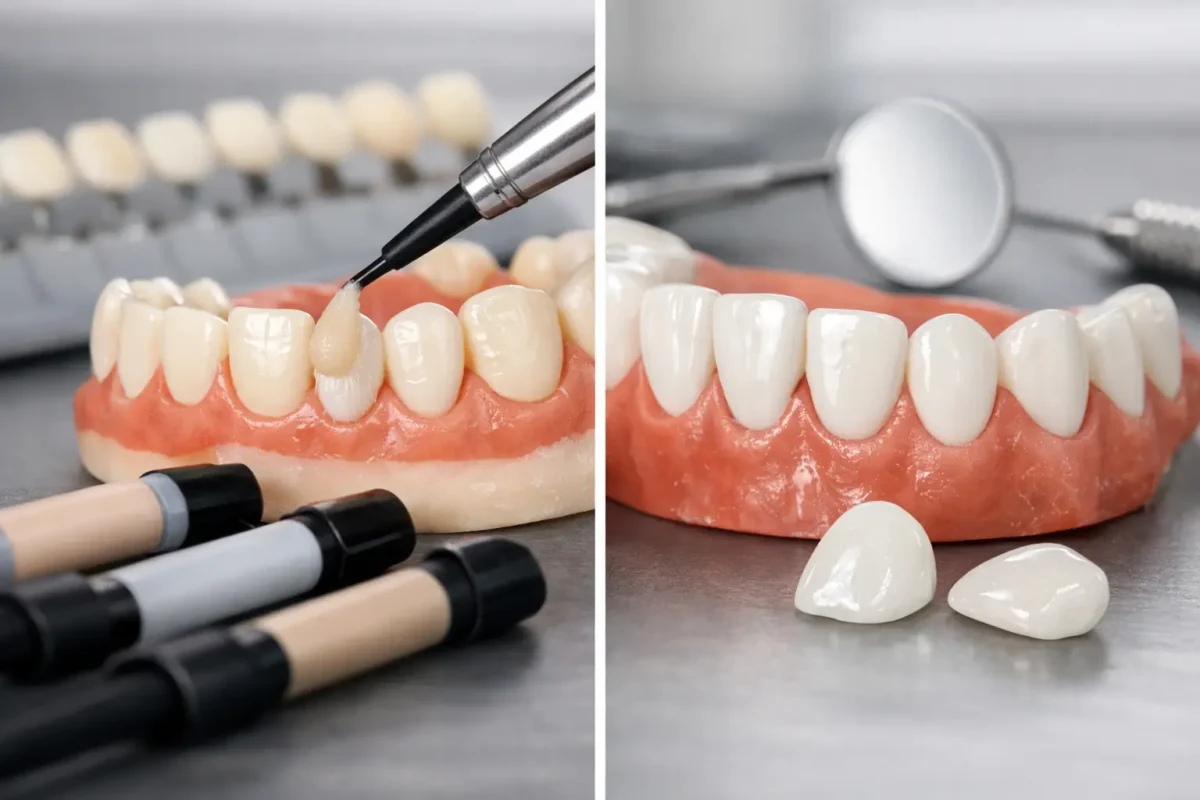
A small chip on a front tooth, uneven edges in photos, or a gap that draws your eye every time you smile can make a cosmetic change feel more significant than it sounds. When considering composite bonding vs veneers, the right choice is rarely about which treatment is “best” in general. It is about what will look natural, protect your teeth, suit your lifestyle, and meet your expectations over time.
Both treatments can improve the shape, color, balance, and overall appearance of your smile. However, they achieve those results differently. A thoughtful consultation should look beyond the immediate cosmetic outcome and consider your tooth structure, bite, gum health, habits, timeline, and budget.
Composite bonding vs veneers: the key difference
Composite bonding uses a tooth-colored resin that is applied directly to the tooth, shaped by your dentist, and hardened with a curing light. It is a highly versatile option for repairing chips, closing small gaps, smoothing irregular edges, making teeth appear more even, or subtly improving shape and proportion.
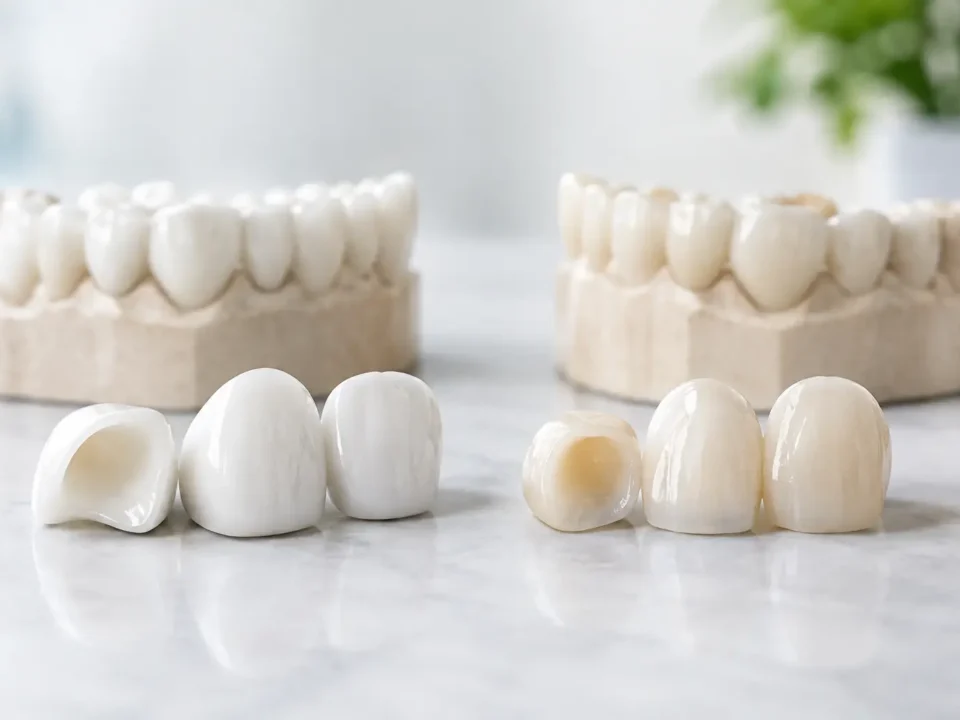
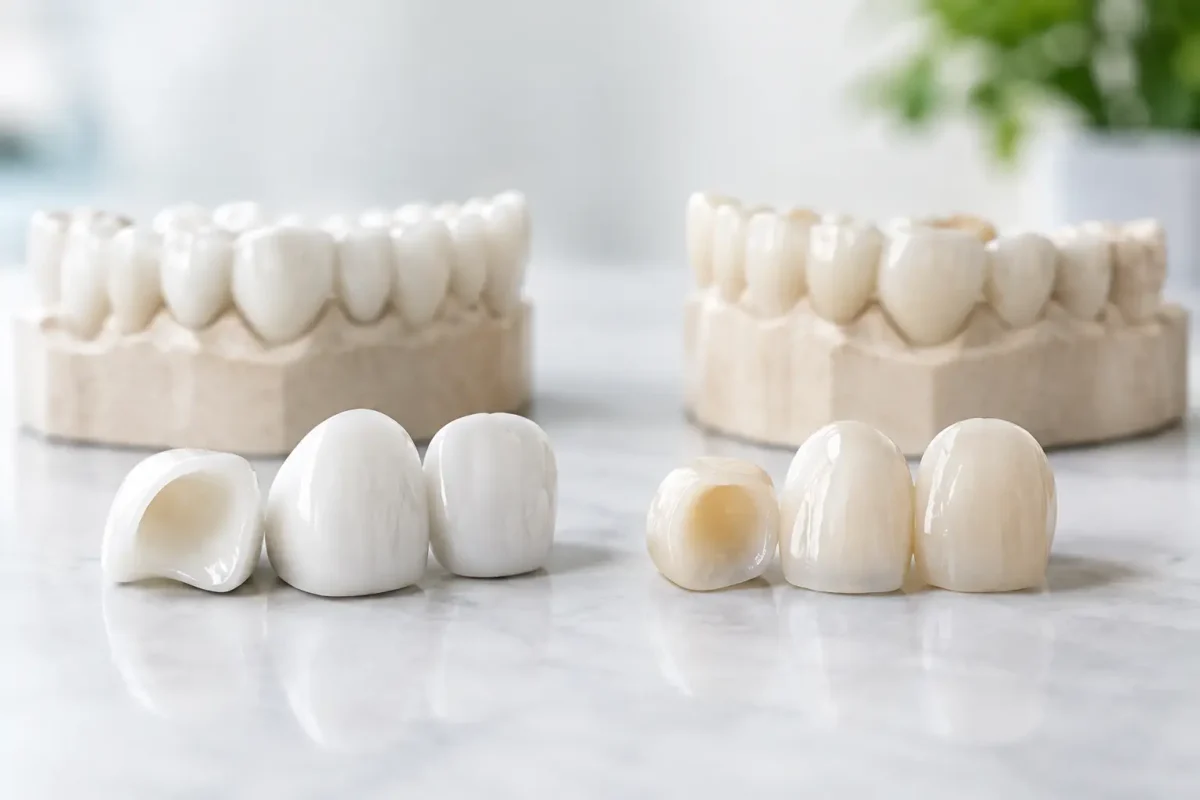
Veneers are thin custom-made shells, most often crafted from porcelain, that cover the visible front surface of a tooth. They are designed in a dental laboratory or, in some cases, created digitally and made in-house. Veneers can create a more comprehensive and consistent change in color, shape, length, and symmetry.
The simplest distinction is that bonding adds and sculpts composite resin directly on the tooth, while veneers are individually fabricated coverings bonded to prepared tooth surfaces. That difference affects the appointment process, durability, maintenance, cost, and how much natural enamel may need to be altered.
When composite bonding can be the better choice
Composite bonding is often an excellent conservative treatment when the concern is localized. If one tooth is chipped, a small gap needs closing, or the edges of several teeth are slightly worn or uneven, resin can provide a noticeable improvement while preserving as much natural tooth structure as possible.
In many cases, little or no enamel needs to be removed. This makes bonding appealing for patients who want an aesthetic improvement without committing immediately to a more permanent restoration. Treatment can often be completed in one visit, depending on the number of teeth and the complexity of the design.
Bonding also allows for repair. If the material chips or wears, it can frequently be polished or added to rather than fully replaced. For someone with a busy schedule in Barcelona, this can make follow-up care more straightforward.
There are trade-offs. Composite resin is more porous than porcelain, so it can gradually pick up stains from coffee, tea, red wine, tobacco, and deeply colored foods. It is also more likely to chip or lose its surface polish over time, particularly in patients who bite their nails, chew pens, or grind their teeth. With good care, composite bonding may last several years, but touch-ups and replacement should be expected as part of long-term maintenance.
When veneers may be worth the investment
Porcelain veneers are usually considered when a patient wants a more substantial, long-lasting cosmetic change. They can be particularly effective for teeth with persistent discoloration, multiple old fillings, uneven shapes, wear, or spacing and alignment issues that are cosmetic rather than functional.
Porcelain has a translucent quality that can closely mimic natural enamel, while also offering excellent resistance to staining. A carefully designed veneer can be refined in its color, texture, length, and contours, helping create a smile that looks polished without appearing artificial.
Veneers generally retain their appearance longer than composite bonding. Many porcelain veneers last 10 to 15 years or longer with appropriate care, although their lifespan depends on bite forces, oral hygiene, dental checkups, and personal habits. They are not maintenance-free, and they can still chip, crack, or become affected if the gums recede over time.
The main consideration is tooth preparation. Traditional veneers usually require a small amount of enamel to be reshaped so the final result does not look bulky. Because enamel does not grow back, this is an irreversible decision. Minimal-preparation and no-preparation veneers are possible in selected cases, but they are not suitable for every smile. If the teeth already project forward, for example, adding material without creating space may produce an overly prominent result.
Appearance: subtle enhancement or a fuller smile redesign?
The choice often comes down to the scale of change you want. Composite bonding is ideal for refinements. It can make a smile look fresher, more even, and more harmonious while keeping the original character of the teeth.
Veneers may be more appropriate when several visible teeth need coordinated changes. They offer greater control over creating a uniform shade and shape, especially where natural teeth vary significantly in color or have more extensive cosmetic concerns.
Neither treatment should aim for a one-size-fits-all “perfect” smile. The most convincing cosmetic dentistry respects facial features, lip line, skin tone, and the natural variations that make a smile look like your own. Photographs, digital planning, and temporary mock-ups can help you understand the proposed result before committing to treatment.
Cost and value over time
Composite bonding usually has a lower initial cost per tooth than porcelain veneers. That can make it a practical way to address a specific concern or test a new smile shape before choosing a longer-term option.
However, initial price is only one part of the decision. Bonding may require polishing, repairs, or replacement sooner, while porcelain veneers cost more upfront but often remain stable for longer. The best value depends on the extent of treatment, your expectations, and whether you are comfortable with future maintenance.
A transparent treatment plan should explain the number of teeth involved, whether whitening or gum treatment is recommended first, what preparation is required, and the likely maintenance costs. Be cautious of cosmetic recommendations made without examining your bite and oral health. A beautiful result should also be comfortable and functional.
Your bite and oral health come first
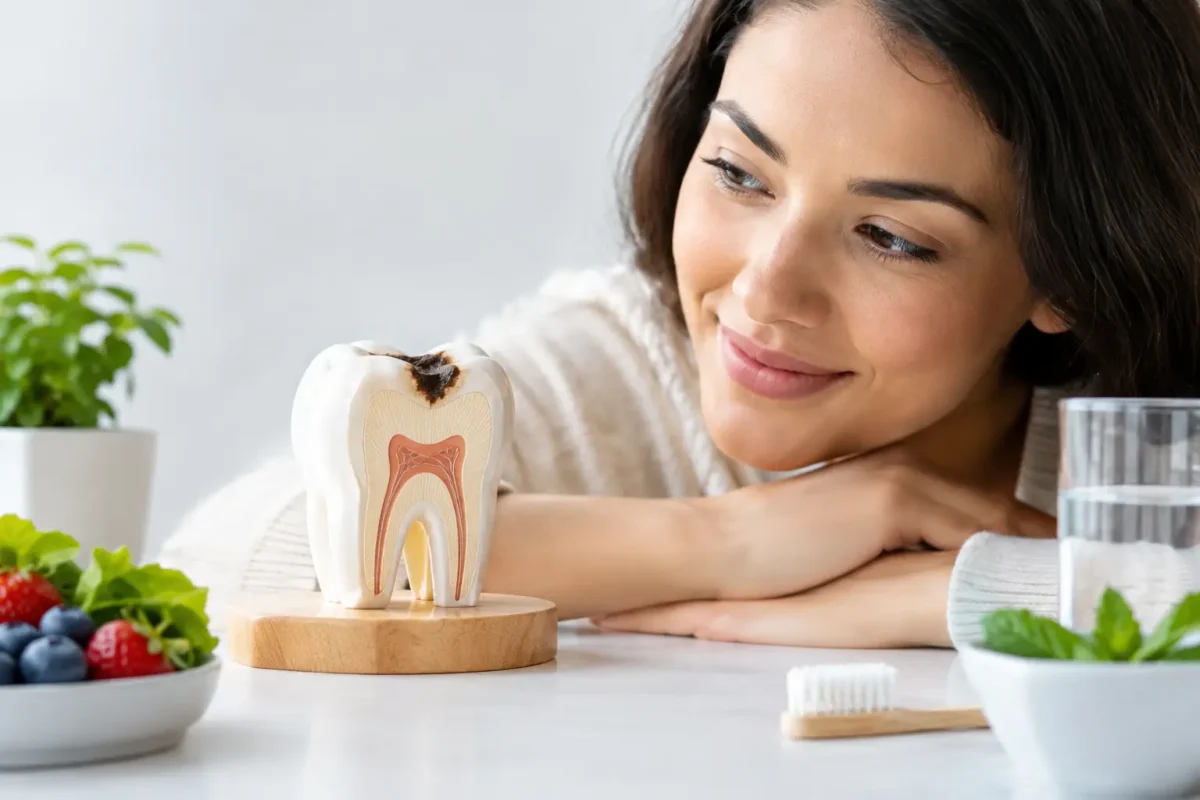
Healthy gums and teeth are the foundation of any cosmetic treatment. Cavities, gum inflammation, active periodontal disease, and unstable bite issues should be addressed before bonding or veneers are placed. Cosmetic dentistry lasts better when it is built on a healthy foundation.
Teeth grinding deserves particular attention. Repeated pressure can damage both resin and porcelain, as well as natural enamel. If you clench or grind, a custom night guard may be recommended after treatment. In some cases, orthodontic treatment may be the more appropriate first step if tooth position is causing crowding, excessive wear, or an unfavorable bite.
If a tooth has a large filling, has had root canal treatment, or is significantly weakened, a veneer may not be the right restoration at all. A crown or another restorative solution may offer better protection. This is why a personalized examination matters more than selecting a treatment based on before-and-after photos alone.
Caring for bonding and veneers
Both options benefit from consistent brushing with a non-abrasive toothpaste, daily cleaning between teeth, and regular hygiene appointments. Avoid using your teeth to open packaging, bite hard objects, or chew ice. These habits can damage even strong restorative materials.
With composite bonding, professional polishing can restore surface smoothness and reduce surface staining. With veneers, avoid highly abrasive whitening products, which will not lighten porcelain and may affect the surrounding natural enamel. If you are considering whitening, it is often best to do it before veneers or bonding so the final shade can be matched correctly.
Making a confident decision
For a small, conservative improvement, composite bonding can be a flexible and attractive first option. For a more complete and durable transformation involving several front teeth, porcelain veneers may offer greater precision and stain resistance. There is also a middle ground: some patients benefit from veneers on selected teeth and bonding on others.
At The British Dental Clinic, a cosmetic consultation is designed to give you clear options rather than steer you toward a single treatment. The most satisfying result is not simply the brightest or most uniform smile. It is one that feels comfortable, suits your face, and lets you smile without thinking twice.