Implantes dentales: what to expect
junio 16, 2026
Porcelain Veneers Barcelona: What to Know
junio 20, 2026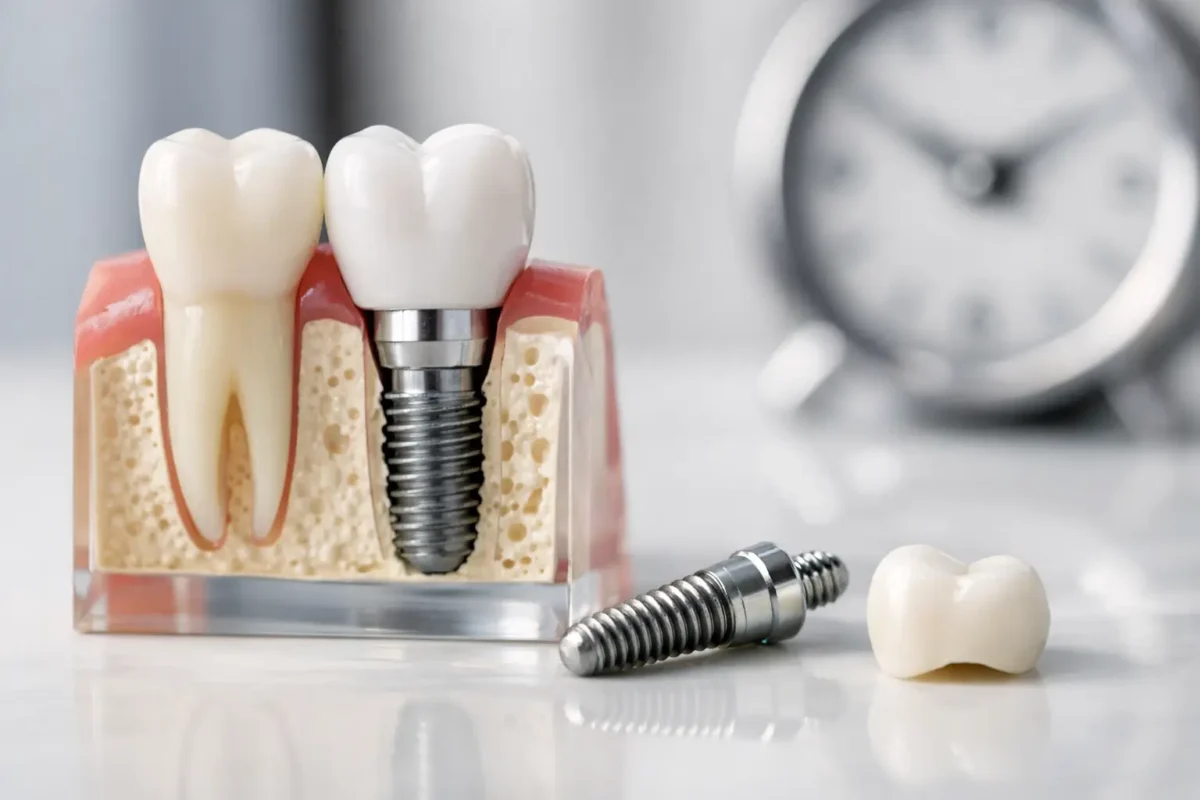
You probably are not really asking whether a dental implant can survive a few years. What most patients want to know is whether it will still feel solid, look natural, and let them eat comfortably a decade from now. That is the real question behind cuanto dura un implante, and the honest answer is this: the implant itself can last many years, often decades, but its lifespan depends on your health, your bite, the quality of the treatment, and how well it is maintained.
For many people, a dental implant is the closest thing modern dentistry offers to replacing a natural tooth. It is designed to be stable, functional, and long-lasting. But like any treatment in the mouth, it is not a lifetime guarantee with no conditions attached. Understanding what lasts, what may need maintenance, and what can shorten an implant’s life helps you make a better decision from the start.
Cuanto dura un implante in real terms
When people ask how long an implant lasts, they are often talking about the whole restoration as if it were one piece. In reality, there are two main parts. The implant is the titanium post placed in the jawbone, and on top of it sits the visible restoration, usually a crown. These parts do not always have the same lifespan.
The implant fixture itself can often last 15 to 25 years or more, and in many cases much longer. Well-placed implants with healthy surrounding bone and gums can remain stable for decades. The crown attached to the implant usually has a shorter expected life. Depending on the material, the bite forces involved, and daily wear, a crown may need replacement after 10 to 15 years, sometimes sooner, sometimes later.
This distinction matters because patients sometimes hear that an implant «lasts forever» and assume no future maintenance will be needed. That is not how real dentistry works. The goal is long-term success, not a promise that no component will ever need attention.
What affects how long an implant lasts?
The biggest factor is not luck. It is the combination of planning, placement, healing, and maintenance.
Bone and gum health
An implant needs healthy bone for support and healthy gums around it for protection. If bone volume is limited or the gums are inflamed, the long-term outlook can change. This does not always mean you cannot have an implant. It may simply mean additional treatment is needed first, such as gum therapy or bone grafting.
Gum health is especially important because implants can develop inflammation just as natural teeth can. If plaque builds up and the tissue around the implant becomes infected, bone loss may follow. That is one of the main reasons implants fail after they have initially integrated well.
The quality of treatment planning
Good implant dentistry starts long before placement day. Digital imaging, careful bite analysis, and precise positioning all affect the final outcome. An implant placed at the wrong angle or in the wrong position may be harder to clean, may carry too much pressure, or may compromise the final crown.
This is why advanced planning and guided implant surgery can make a meaningful difference. Precision does not just improve the surgical experience. It can support better function and easier maintenance over time.
Your bite and habits
Some people place much more force on their teeth than others. If you clench or grind, your implant crown may wear faster, loosen, or chip. Heavy bite pressure can also strain the components over time. This does not mean implants are a bad option for people who grind. It means the treatment plan may need to account for that, often with a night guard and careful bite adjustment.
Habits matter too. Smoking is one of the clearest risk factors for implant complications because it affects healing and gum health. Poor oral hygiene, irregular dental visits, and using teeth as tools all increase risk.
General health
Certain medical conditions can influence healing and long-term success. Uncontrolled diabetes, active gum disease, and some medications may affect outcomes. That does not automatically rule out treatment, but it does mean your dentist should assess your medical history carefully and tailor the plan to you.
How long does the healing phase last?
Another version of cuanto dura un implante is really about the process, not the lifespan. Patients often want to know how long it takes before the implant feels like part of the mouth.
In many cases, the implant needs a healing period of a few months to bond with the bone. This is called osseointegration. Depending on the area treated, bone quality, and whether extraction or grafting is involved, the timeline can vary. Some patients are suitable for same-day implant solutions, while others benefit from a more staged approach.
Same-day does not mean rushed. It means the case has been carefully selected and planned. For the right patient, immediate treatment can be predictable and convenient. For others, waiting gives the implant a better chance of long-term success. A trustworthy clinic explains that difference clearly instead of forcing every case into the fastest option.
Signs an implant is doing well
A healthy implant should feel stable when you chew, look natural in the smile, and remain comfortable day to day. The surrounding gum should appear healthy, without persistent swelling, bleeding, or tenderness. Small maintenance issues can happen without meaning the implant is failing, but symptoms should never be ignored.
Warning signs include discomfort when biting, loosening of the crown, bleeding around the implant, bad taste, swelling, or gum recession. Sometimes the implant itself is still stable and only the crown or screw needs attention. Sometimes there is inflammation around the implant that needs prompt treatment. Either way, early review is always better than waiting.
Can an implant fail years later?
Yes, it can. Early failures usually happen when the implant does not integrate properly during healing. Later failures are more often linked to infection, bone loss, bite overload, or neglected maintenance.
That said, failure is not the usual outcome when treatment is well planned and the patient is reviewed regularly. Most implants that heal well and are properly cared for perform very successfully for many years. The key is to think of implants as a long-term investment that still needs routine care, not as a one-time fix you can forget about.
How to help your implant last longer
Daily care does not need to be complicated, but it does need to be consistent. Brushing thoroughly twice a day, cleaning carefully around the implant, and attending regular hygiene and checkup appointments all matter. If your dentist recommends a night guard, wearing it can protect both the implant and your natural teeth.
It also helps to address small problems early. A chipped crown, inflammation around the gums, or a change in your bite may seem minor at first. Left alone, those issues can lead to more expensive and more complex treatment later.
For international patients or busy professionals, convenience often shapes whether maintenance actually happens. That is why clear follow-up plans, transparent communication, and practical scheduling make a real difference. Good dentistry is not only about placing the implant well. It is also about making ongoing care feel manageable.
Is a dental implant worth it for the long term?
For many adults, yes. An implant can restore confidence, chewing ability, and comfort in a way that feels very close to a natural tooth. Compared with options that rely on neighboring teeth or removable appliances, implants often offer better stability and preserve the jawbone more effectively.
But worth is not just about longevity. It is also about whether the treatment suits your goals, budget, health, and expectations. Some patients want the longest-lasting fixed solution available. Others may prefer a simpler or more affordable alternative. The best decision comes from a clear conversation about benefits, limits, and likely maintenance over time.
At a clinic such as The British Dental Clinic in Barcelona, that conversation is especially valuable for international patients who want details explained clearly and without pressure. When you understand what affects success, what maintenance may be needed, and what realistic timelines look like, the decision feels far less stressful.
If you are asking cuanto dura un implante, the most helpful answer is not a single number. It is this: with the right planning, skilled placement, and steady care, an implant can serve you very well for many years – and often for decades. The smartest next step is not chasing the fastest promise, but choosing treatment built to last.