Best Treatments for Stained Teeth That Work
agosto 1, 2026
Implant Bridge or Dentures – Which Is Better?
agosto 5, 2026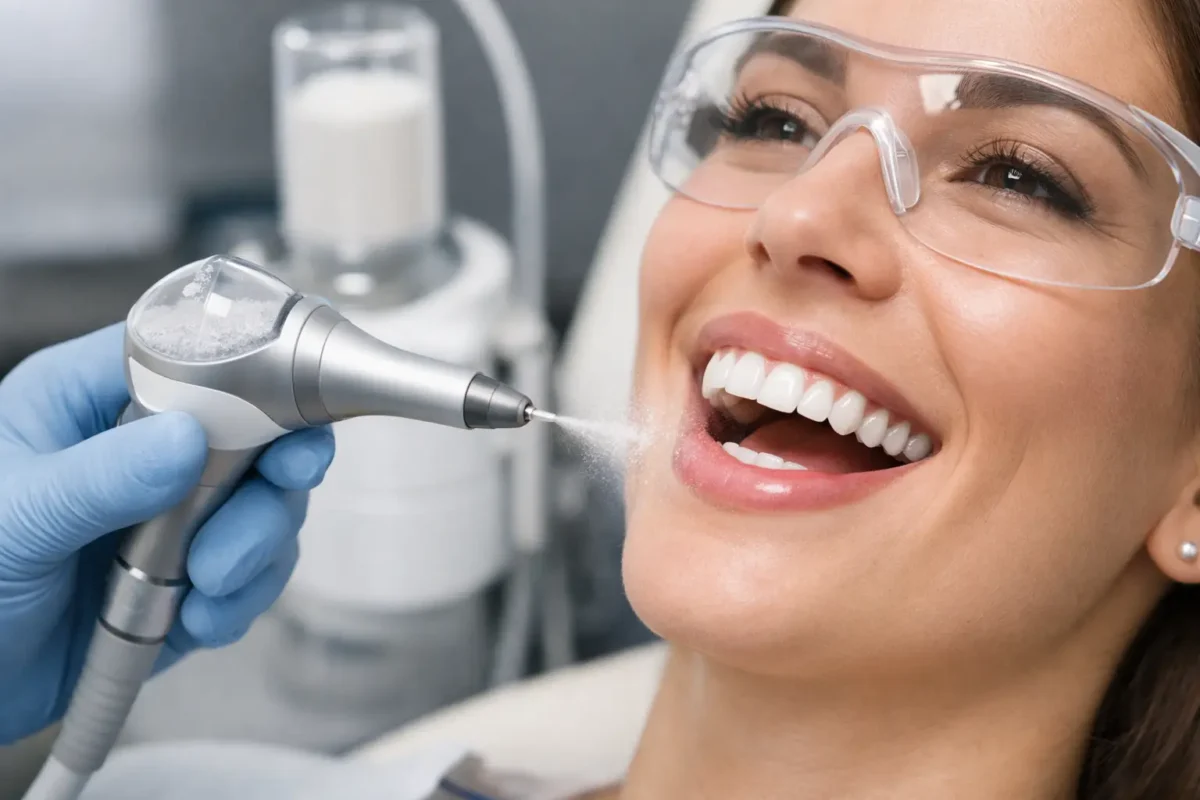
Coffee, red wine, travel, and busy workdays can all leave their mark on a smile. If you have been searching for the beneficios de higiene Airflow, you are likely looking for more than a routine cleaning: you want a treatment that feels comfortable, protects your gums, and leaves your teeth looking noticeably fresher.
Airflow hygiene is a modern professional cleaning method that uses a controlled stream of warm water, air, and fine powder to remove dental plaque, soft deposits, and many external stains. It is a gentle approach that can be particularly reassuring for patients who find traditional scaling uncomfortable or who want to maintain a brighter, cleaner-looking smile between visits.
What is Airflow hygiene?
Airflow is part of guided professional dental hygiene. Rather than relying only on manual instruments, your dental professional directs a pressurized mixture of water, air, and powder over the tooth surfaces and along the gumline. The powder is designed to disrupt the biofilm that builds up naturally in the mouth.
Biofilm is the sticky layer of bacteria commonly called plaque. When it is not removed thoroughly, it can contribute to tooth decay, gum inflammation, bad breath, and, over time, periodontal disease. Brushing and flossing at home are essential, but they cannot always reach every area effectively, especially around crowded teeth, dental restorations, or the gumline.
The treatment is typically followed by targeted scaling when hardened tartar is present. Airflow is highly effective for soft plaque and surface staining, but it does not replace instruments where calculus needs to be removed. A good hygiene appointment is tailored to what your mouth actually needs, rather than applying the same approach to every patient.
The main benefits of Airflow hygiene
A gentle, comfortable cleaning experience
Many patients appreciate Airflow because it can feel less scraping-focused than a conventional cleaning. The warm water and fine powder help clean tooth surfaces efficiently, and the sensation is often described as a light spray rather than pressure on individual teeth.
Comfort depends on your level of sensitivity and the health of your gums. If you have exposed roots, active gum inflammation, or particularly sensitive teeth, your hygienist can adjust the technique and discuss ways to make the visit more comfortable. Clear communication matters, especially if previous hygiene appointments have felt rushed or unpleasant.
Effective plaque removal around difficult areas
Plaque does not only collect on the flat front surfaces of teeth. It can gather between teeth, close to the gumline, around orthodontic attachments, and near the edges of crowns or fillings. Airflow can help clean these areas carefully and consistently.
This is especially valuable for people with braces, retainers, implants, bridges, crowns, veneers, or composite bonding. These treatments do not make hygiene less important. In fact, they make professional maintenance more important because plaque can settle around detailed surfaces and margins that are harder to clean at home.
Reduction of surface stains
Airflow can remove many external stains caused by coffee, tea, red wine, tobacco, and strongly pigmented foods. The result is often a cleaner, brighter appearance without changing the natural color of the tooth.
This distinction is useful. Professional hygiene removes surface discoloration, while whitening treatment lightens the internal shade of the enamel. If your goal is a noticeably whiter smile, a dentist can help you decide whether hygiene alone is likely to meet your expectations or whether whitening would be a better next step.
Support for gum health
Healthy gums should look pink or coral in color, sit comfortably around the teeth, and not bleed regularly during brushing. Bleeding, puffiness, tenderness, or persistent bad breath can be signs that plaque is irritating the gums.
By disrupting plaque around and below the gumline where appropriate, Airflow hygiene supports the prevention and management of early gum inflammation. For patients with diagnosed periodontal disease, however, it may form part of a broader maintenance plan rather than being the complete treatment. Deeper pockets, bone loss, and active infection require an individual periodontal assessment and more targeted care.
A useful choice for implant maintenance
Dental implants are designed to be long-lasting, but the tissues around them still need attentive care. Plaque accumulation around an implant can lead to inflammation and, in more serious cases, peri-implant disease. Regular professional hygiene helps protect both the implant and the surrounding gums.
Airflow systems using appropriate low-abrasive powders can be suitable for cleaning around implants and restorations when used by trained dental professionals. Your clinician will select the right powder and settings for your specific situation, rather than using a one-size-fits-all technique.
What happens during an Airflow appointment?
Your appointment should begin with an assessment of your teeth, gums, and any concerns you have noticed at home. Your hygienist may ask about bleeding gums, sensitivity, bad breath, changes around an implant, or areas that are difficult to clean. This conversation helps make the treatment more personal and clinically useful.
The Airflow stage cleans plaque and surface stains from the teeth and gumline. If tartar is present, ultrasonic or hand scaling may be used afterward to remove it safely. Your clinician may also polish selected areas, review your brushing technique, and recommend the right interdental brushes, floss, or other tools for your mouth.
Most routine appointments are straightforward, but timing varies. Someone with healthy gums and light staining may need a shorter visit than someone with heavy tartar buildup, braces, implants, or signs of gum disease. A transparent recommendation should explain what is needed and why.
Who may benefit most from Airflow hygiene?
Airflow can be an excellent option for patients who want a comfortable professional clean, have noticeable tea or coffee stains, wear braces or retainers, or need regular implant and restoration maintenance. It can also be a reassuring choice for people who have avoided hygiene appointments because they associate them with discomfort.
That said, it is not automatically the best standalone solution for every dental concern. Deep periodontal pockets, extensive tartar, untreated decay, loose restorations, or gum pain need a dental assessment first. The right treatment is based on the condition of your teeth and gums, not simply on what is most popular.
At The British Dental Clinic, a hygiene visit is approached as preventive care rather than a cosmetic quick fix. Patients are given clear explanations of what the clinical team sees, what can be addressed during the appointment, and whether any follow-up treatment would genuinely be beneficial.
How to keep the results looking and feeling fresh
The clean feeling after Airflow is motivating, but lasting results come from daily habits. Brush twice a day with fluoride toothpaste, clean between your teeth every day, and follow the technique recommended by your hygienist. If you drink coffee, tea, or red wine frequently, rinsing with water afterward can help reduce the time pigments remain on the teeth.
It is also worth avoiding the temptation to brush aggressively. Hard brushing does not remove more plaque, and it can irritate gums or wear away tooth surfaces over time. A soft-bristled toothbrush, gentle pressure, and consistent technique are more effective.
Your recommended recall interval may be every six months, but some patients benefit from more frequent hygiene care. People with gum disease, implants, orthodontic appliances, or a history of heavy plaque buildup may need closer monitoring. Your dental professional can set a schedule that reflects your actual risk factors.
A professional cleaning should leave you feeling informed as well as refreshed. If you have noticed stains, bleeding gums, sensitivity, or simply want a more comfortable way to maintain your smile, an Airflow hygiene assessment can provide a clear starting point and a treatment plan that feels right for you.