How to Reduce Dental Anxiety Before an Appointment
julio 20, 2026
Are Veneers Worth It? A Clear Decision Guide
julio 24, 2026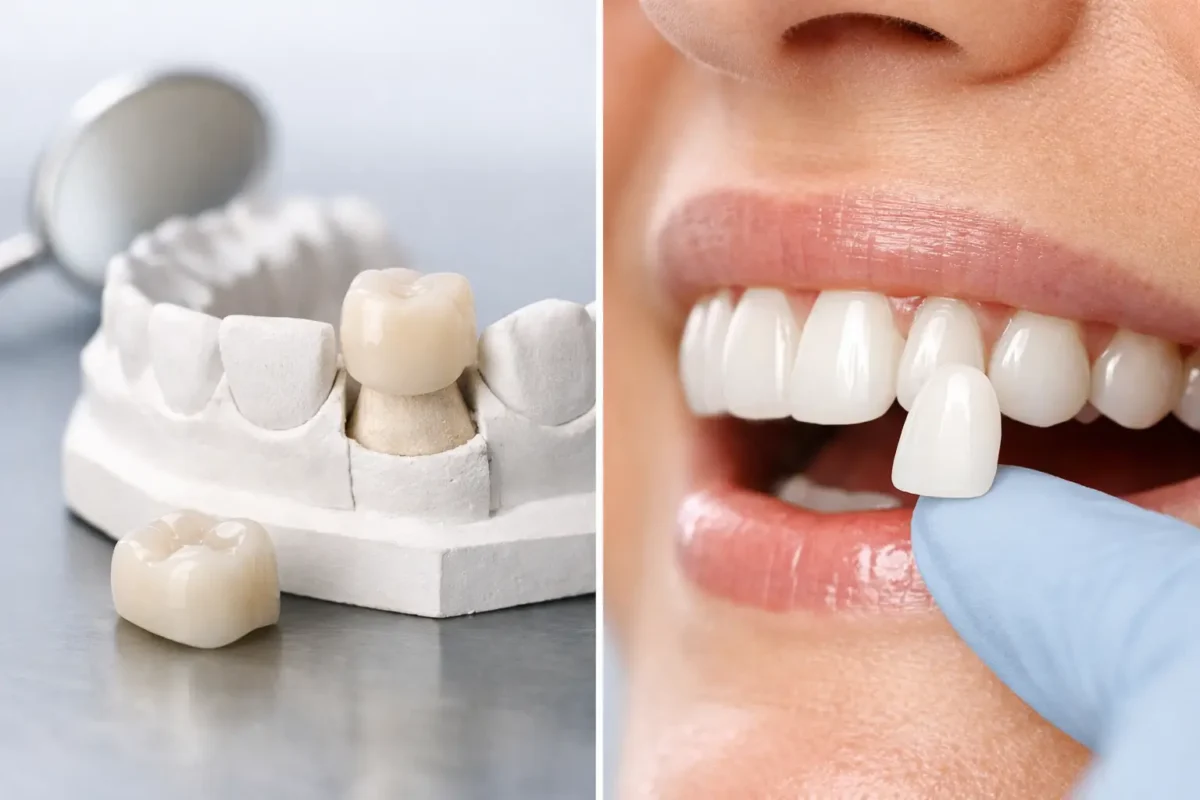
A chipped front tooth before an important presentation, a darkened tooth that whitening cannot change, or an old filling that keeps breaking can all lead to the same question: should you choose a dental crown or veneer? Although both treatments can create a natural-looking, stronger smile, they solve very different problems.
The best choice is not simply the one that looks better in photographs. It depends on how much healthy tooth structure remains, whether the tooth has cracks or decay, how your bite functions, and the result you want to achieve. A careful examination and clear treatment plan help ensure that your smile looks beautiful while remaining healthy for the long term.
Dental Crown or Veneer: The Key Difference
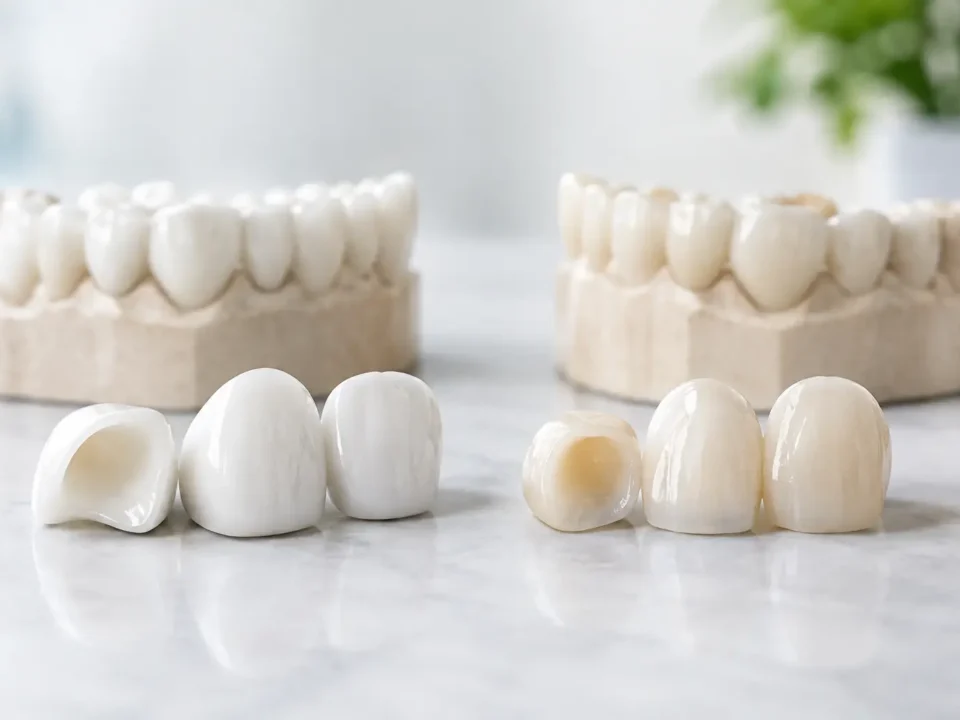
A veneer covers the front surface of a tooth. It is a thin, custom-made shell, usually crafted from porcelain, designed to improve the tooth’s visible appearance. Veneers are most often chosen for front teeth that are discolored, slightly uneven, chipped, worn, or separated by small gaps.
A crown covers the entire visible portion of a tooth, like a protective cap. It is typically recommended when a tooth needs structural support as well as a cosmetic improvement. A crown can restore a tooth that is heavily filled, fractured, weakened after root canal treatment, severely worn, or affected by substantial decay.
Put simply, a veneer is primarily an aesthetic restoration for a tooth that is otherwise sound. A crown is a restorative solution that can also deliver an excellent cosmetic result. This distinction matters because preserving healthy tooth structure is always a priority, but a weak tooth should not be treated as though it only has a cosmetic concern.
When a Veneer May Be the Better Choice
Veneers can be an excellent option when the tooth is healthy but its appearance no longer reflects the smile you want. Porcelain has a light-reflecting quality that closely resembles natural enamel, allowing the dentist to refine color, shape, length, and symmetry without making the tooth look artificial.
They are often suitable for someone who has one or several front teeth with stubborn discoloration, minor chips, slightly irregular edges, or small spaces. They may also help create a more balanced smile when teeth appear unusually narrow, short, or unevenly shaped.
Preparing a tooth for a veneer usually involves removing a small amount of enamel from the front surface, though the exact amount varies. Some conservative cases may allow minimal preparation, while others require more space to achieve a natural contour and avoid a bulky appearance. A dentist should never promise “no-prep” veneers without first assessing your bite, tooth position, and existing enamel.
Veneers are not the right answer for every cosmetic concern. If a tooth has a large filling, a deep crack, active decay, or significant loss of structure, placing a thin veneer may not provide enough protection. Patients who heavily grind or clench their teeth may also need bite protection, such as a custom night guard, to reduce the risk of chipping.
When a Dental Crown Is the Safer Choice
A dental crown is designed to restore strength. When a tooth has lost a considerable amount of its natural structure, a crown surrounds it and helps distribute the force of biting and chewing more evenly. This may reduce the chance of a weakened tooth breaking further.
Crowns are commonly recommended after root canal treatment because the tooth can become more brittle over time. They are also used to restore teeth with large old fillings, extensive decay, fractures, severe wear, or a previous restoration that repeatedly fails.
For visible teeth, modern ceramic crowns can be carefully matched to the shade, translucency, and character of neighboring teeth. For back teeth, materials are selected with daily chewing forces in mind. The right crown material depends on the tooth’s location, your bite, the amount of available tooth structure, and your cosmetic priorities.
Because a crown covers the entire tooth, it generally requires more preparation than a veneer. That is why a crown is not usually the first choice for a healthy tooth with only a minor cosmetic flaw. However, when protection is needed, choosing a veneer instead can be a false economy if the tooth remains vulnerable underneath.
Appearance, Durability, and Tooth Preservation
Both crowns and veneers are custom designed rather than selected from a standard shelf. Your dentist considers the proportions of your face, the shape of nearby teeth, your gum line, and how your teeth meet when you speak and bite. The aim is a result that feels like your own smile, only healthier and more harmonious.
Porcelain veneers are highly resistant to staining and can maintain their color for many years with good care. Crowns can also be long-lasting, but their lifespan depends on the material used, oral hygiene, bite forces, and whether decay develops around the edges. Neither restoration is permanent, and neither is immune to damage.
In general, veneers preserve more of the natural tooth than crowns. Yet preserving tooth structure only benefits you when the remaining structure is strong enough. If the tooth is compromised, the more conservative-looking option is not necessarily the more conservative treatment overall.
This is also why whitening should be discussed before deciding on veneers or crowns. Natural teeth can be whitened, but porcelain and ceramic restorations do not respond to whitening gel. If you would like a brighter overall smile, whitening first can help your dentist match the final restorations to your preferred shade.
What the Treatment Process Usually Involves
The process begins with a consultation, photographs or digital scans, and an assessment of your teeth, gums, bite, and oral health. Any gum inflammation, decay, or grinding habit should be addressed before cosmetic work is finalized. A beautiful restoration needs a stable foundation.
For a veneer or crown, the tooth is prepared carefully and a digital impression or scan is used to create the final restoration. In many cases, you will wear a temporary while the custom veneer or crown is made. Some crown cases may be suitable for same-day treatment, depending on the tooth and the clinical requirements.
At the fitting appointment, the dentist checks the shape, color, fit, and bite before bonding or cementing the restoration. This stage should not feel rushed. Small refinements can make a meaningful difference to comfort, speech, and the natural appearance of the result.
Questions to Ask Before You Decide
The most useful question is not “Which one lasts longer?” but “What does this tooth need?” Ask your dentist how much healthy tooth structure remains, whether there are cracks or old fillings beneath the surface, and whether your bite places extra pressure on the area.
You may also want to ask whether whitening, bonding, orthodontic treatment, or replacing an old filling could achieve your goal with less intervention. For example, a small chip may be better treated with composite bonding, while crowded teeth may benefit from orthodontics before veneers are considered. Good dentistry includes discussing alternatives, not steering every concern toward the same solution.
Cost should be discussed openly as part of the treatment plan. The fee reflects more than the visible restoration: it includes diagnosis, tooth preparation, materials, laboratory or digital design, temporary protection when required, and follow-up care. Understanding what is included helps you make a confident decision without surprises.
Caring for Crowns and Veneers
Crowns and veneers need the same daily attention as natural teeth. Brush twice daily with a non-abrasive toothpaste, clean between teeth every day, and attend regular checkups and hygiene appointments. Gum health is especially important because inflammation or recession can affect the appearance of restoration edges over time.
Avoid using your teeth to open packaging or bite hard objects such as ice. If you grind or clench, wearing a professionally made night guard can protect both your restorations and your natural teeth. Contact your dentist promptly if a crown feels loose, your bite changes, or a veneer chips.
At The British Dental Clinic, the decision is approached as a conversation, not a one-size-fits-all recommendation. With clear explanations and a personalized plan, you can choose a restoration that supports both your confidence and your long-term oral health.
A well-chosen crown or veneer should never just cover a problem. It should help you eat comfortably, smile naturally, and feel certain that your teeth are being cared for with the right balance of precision and restraint.