Digital Dentistry Trends Patients Should Know
noviembre 17, 2026
Teeth Whitening Review for a Brighter Smile
noviembre 21, 2026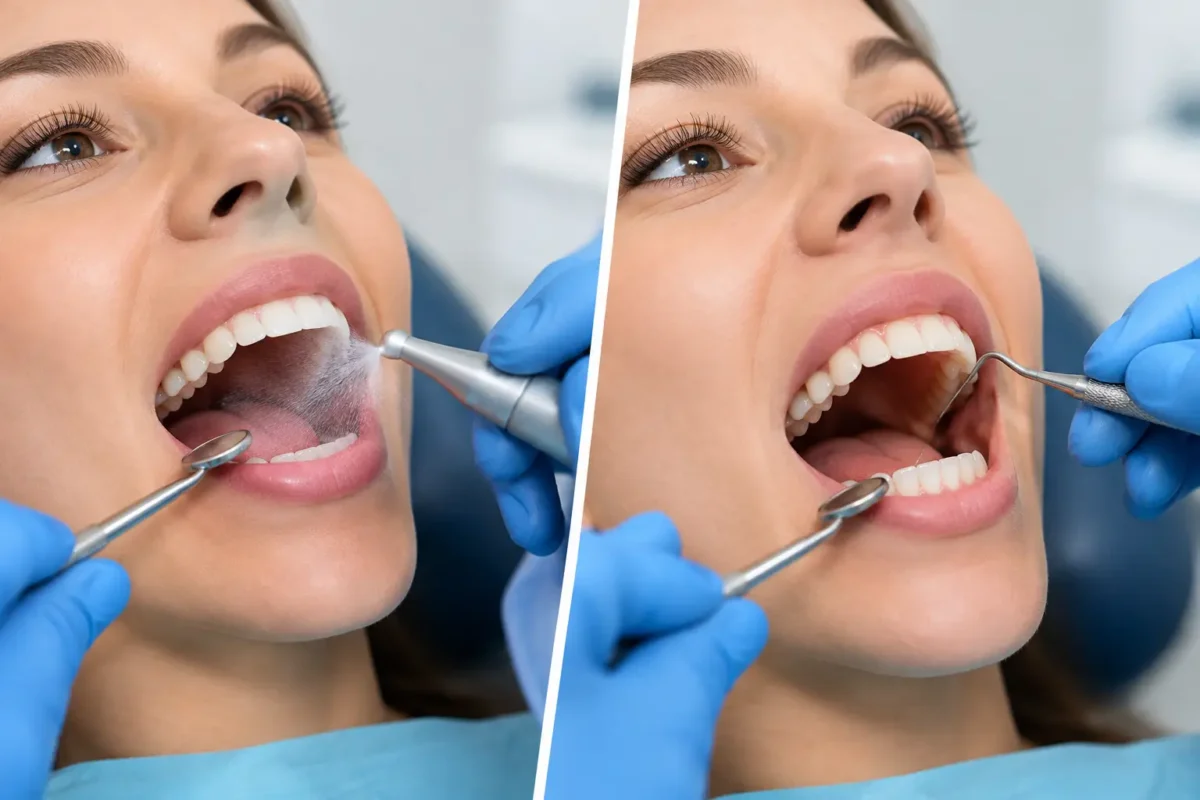
A hygienist may recommend Airflow, scaling, or a combination of both, and the names can make the choice sound more complicated than it is. In the conversation around airflow cleaning versus scaling, the key difference is what needs to be removed from your teeth and gums. One treatment is particularly effective for freshening away soft plaque and surface stains, while the other is essential when hardened tartar is present.
The best approach is not about choosing the newest option or simply booking the fastest one. It is about matching your hygiene care to the condition of your mouth, your gum health, and the result you want to achieve. A clear examination allows your dental team to explain what they see and recommend treatment without guesswork.
Airflow Cleaning Versus Scaling: The Main Difference
Airflow cleaning, sometimes called air polishing, uses a controlled stream of air, warm water, and fine powder to remove soft plaque, food debris, and staining from the tooth surface. It is especially useful in the areas that can be difficult to clean thoroughly at home, including around the gumline, between teeth, and around orthodontic appliances, restorations, or implants.
Scaling removes tartar, also known as calculus. Tartar begins as plaque, but once it has hardened onto the teeth, brushing and flossing cannot remove it. A dental professional uses ultrasonic instruments, hand instruments, or both to carefully lift these deposits from above and, where necessary, below the gumline.
In simple terms, Airflow is excellent for polishing away soft buildup and visible stains. Scaling is needed for hardened buildup. Many patients benefit from both in the same hygiene visit: scaling first where tartar is present, followed by Airflow to clean and refresh the remaining tooth surfaces.
What Airflow Cleaning Feels Like
For patients who find conventional polishing uncomfortable, Airflow can feel like a more pleasant experience. The clinician directs a gentle jet of water and powder across the teeth rather than pressing a rotating rubber cup against each surface. Modern systems often use warm water, which can make treatment easier for people with mild sensitivity.
Airflow is particularly popular with coffee, tea, red wine, and tobacco users because it can lift external staining efficiently. It does not whiten teeth in the same way as professional whitening treatment, since it does not change the internal color of the tooth. However, removing surface stains can reveal the cleaner, brighter natural shade underneath.
It can also be a practical option for patients with braces, fixed retainers, crowns, veneers, or implants. These areas require careful cleaning, and a clinician will select the appropriate powder and settings for the surfaces being treated. Airflow is gentle, but it is still a professional procedure that should be tailored to your individual dental work and gum condition.
When Scaling Is Necessary
If you can feel a rough, hard edge near the gumline with your tongue, tartar may be present. It commonly collects behind the lower front teeth and along the outer surfaces of the upper molars, although it can form anywhere plaque is left undisturbed. Some people build tartar more quickly than others, even with consistent brushing.
Scaling is not an optional cosmetic step when calculus has accumulated. Tartar holds bacteria against the gums and can contribute to inflammation, bleeding, bad breath, and gum disease. Removing it helps create a cleaner surface that is easier to maintain at home.
For early gum inflammation, a routine scale and clean may be sufficient. If deposits extend deeper below the gums or there are signs of periodontal disease, treatment may need to be more targeted. This can involve deeper cleaning over more than one visit, with local anesthetic offered when appropriate for comfort. The goal is not merely to make teeth look clean, but to reduce the bacterial buildup affecting gum and bone support.
Is Airflow Better Than Traditional Scaling?
Neither is universally better because they do different jobs. Airflow cannot reliably remove established tartar, and scaling does not always deliver the same level of stain removal and smooth finish as air polishing. Presenting them as competing treatments can be misleading.
If your teeth are free from significant calculus but have surface staining or plaque around hard-to-reach areas, Airflow may be the main part of your appointment. If tartar is visible, scaling will be necessary. Where both soft plaque, staining, and tartar are present, combining the two provides a more complete result.
Your dental history also matters. Someone attending regular hygiene visits with healthy gums may require only light scaling followed by Airflow. Someone who has delayed appointments for several years, experiences gum bleeding, or has a history of periodontal treatment may need a more detailed assessment and a different care plan. A hygienist should explain the reason for each recommendation, the likely number of visits, and any expected fees before treatment begins.
Comfort, Sensitivity, and Dental Anxiety
It is completely reasonable to ask what a hygiene appointment will feel like, particularly if a previous cleaning was uncomfortable. Airflow is often well tolerated, but sensitivity can still occur when gums are inflamed, roots are exposed, or cold water triggers sensitive teeth. Scaling can also create brief sensations of pressure or vibration, especially around tartar deposits.
Comfort improves when your clinician knows your concerns in advance. You can ask for pauses, let the team know which areas are sensitive, and discuss options such as topical numbing gel or local anesthetic for more extensive scaling. A calm, unrushed appointment makes a meaningful difference, especially for patients who have avoided dental care because of anxiety.
Bleeding during cleaning can be worrying, but it is often a sign of gum inflammation rather than damage caused by the appointment. Once plaque and tartar are removed and daily cleaning improves, bleeding commonly reduces. Persistent bleeding, swelling, loose teeth, or bad breath should always be assessed rather than covered up with a more frequent polish.
How Often Should You Have Airflow or Scaling?
There is no single schedule that suits every adult. For many people with healthy teeth and gums, professional hygiene care every six months works well. Others may benefit from more frequent visits, particularly if they have gum disease, smoke, wear braces, have implants, or develop tartar quickly.
At home, brushing twice daily with fluoride toothpaste and cleaning between the teeth once a day remain the foundation of gum health. Airflow and scaling enhance that routine, but they cannot replace it. Equally, excellent home care cannot remove tartar once it has formed.
If you have crowns, veneers, bonding, or implants, regular hygiene appointments protect your investment as well as your natural teeth. The right professional cleaning method helps maintain the margins where restorations meet teeth and the gum tissues around implants, where plaque control is particularly important.
What to Expect at Your Appointment
A thoughtful hygiene visit starts with an assessment rather than an automatic treatment. Your clinician will look at your gums, check for plaque and tartar, note staining, and review anything you have noticed, such as bleeding or sensitivity. If deeper gum concerns are present, they may measure the spaces between the teeth and gums to understand whether further periodontal care is needed.
Treatment is then adapted to what is found. You may have Airflow alone, scaling alone, or both. Afterward, your teeth can feel exceptionally smooth, and your gums may be mildly tender for a day or two if there was significant inflammation or tartar removal. Your clinician can give specific advice on brushing, interdental brushes, floss, and any areas that need more attention.
For international patients in Barcelona, clear communication matters just as much as clinical care. You should leave knowing what was done, why it was recommended, and when to return – without uncertainty about your oral health plan.
A cleaner smile can be an immediate benefit, but the more valuable result is knowing your gums have been properly assessed and cared for. Whether your visit calls for Airflow, scaling, or both, the right treatment is the one that supports a healthy mouth long after the polished feeling fades.