Can Cavities Heal Naturally? What Tooth Decay Needs
octubre 22, 2026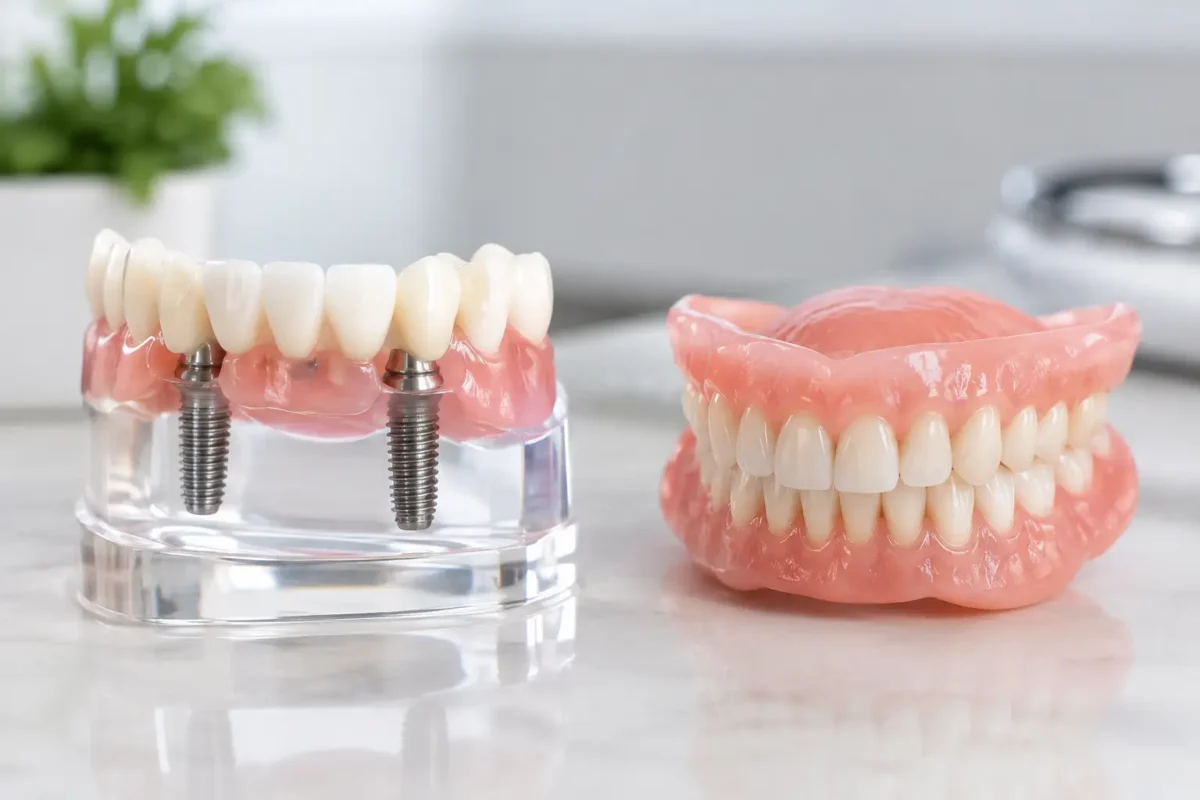
A denture that moves when you speak, eat, or smile can affect far more than your appearance. When considering implant supported versus removable dentures, the real question is often how much stability, comfort, and confidence you want from your replacement teeth – and what is clinically right for your health, timeline, and budget.
Both options can restore a complete smile after tooth loss. The best choice is personal, but it should also be based on a careful assessment of your gums, jawbone, bite, and everyday priorities.
Implant Supported Versus Removable Dentures: The Key Difference
Traditional removable dentures rest on the gums and are held in place by their close fit, natural suction in the upper jaw, and sometimes denture adhesive. They can replace all teeth in an upper or lower arch, or only a number of missing teeth. Modern dentures can look very natural, but they still depend on the shape of the gum and jawbone for retention.
Implant-supported dentures use dental implants – small titanium posts placed in the jawbone – to provide support. The replacement teeth attach to those implants in one of two ways. An implant-retained overdenture clicks onto implants but can be removed at home for cleaning. A fixed implant bridge is secured by the dentist and stays in place day and night.
This distinction matters. Not every implant-supported solution is fixed, and a removable implant-retained denture may be an excellent middle ground for patients who want far more security than a conventional denture provides.
How They Feel During Daily Life
For many people, stability is the biggest difference. A well-made conventional denture can function very successfully, particularly an upper denture with good suction. However, lower dentures tend to be more challenging because the tongue, cheeks, and a flatter lower ridge can make movement more likely.
Implants help keep the denture in a consistent position. This can make speaking feel more predictable and reduce the worry that teeth may lift or shift during a meal. Patients often appreciate being able to laugh, talk in meetings, or enjoy a restaurant meal without constantly thinking about their denture.
Implant support may also improve chewing efficiency. With a conventional denture, very hard, sticky, or fibrous foods can be difficult to manage. Implant-supported teeth generally allow a broader, more comfortable diet, although the exact improvement depends on the number and placement of implants, the design of the restoration, and your bite.
Comfort is not only about movement. A full upper removable denture covers the palate, which can alter the way food tastes or feels. A fixed implant bridge may leave the palate uncovered. Some patients value this greatly, while others prefer a removable solution because it is easier for them to clean outside the mouth.
Bone Health and Facial Support
After a tooth is lost, the jawbone in that area gradually shrinks because it no longer receives the stimulation created by chewing through a tooth root. Conventional dentures replace visible teeth, but they do not replace that stimulation. Over time, changes in the jaw ridge can affect denture fit and may make relines or replacement necessary.
Dental implants transmit chewing forces into the jawbone, helping preserve bone in the areas around the implants. They cannot stop every age-related change in the face or mouth, but they can offer an important long-term advantage for suitable candidates.
Bone loss does not automatically rule out implants. Some patients need bone grafting, while others may be candidates for carefully planned implant positions that avoid grafting. Digital scans and imaging help the dentist evaluate available bone and design a safer, more precise treatment plan.
Treatment Time and What the Process Involves
A conventional removable denture is usually the faster route to replacing missing teeth. It may be made after teeth are removed and gums have healed, or an immediate denture may be prepared in advance and fitted on the day of extractions. Immediate dentures can prevent you from being without teeth, though they commonly need adjustments as the gums heal.
Implant treatment involves a surgical phase, followed by a healing period while the implants integrate with the bone. In some cases, a temporary fixed solution can be provided on the same day as implant placement. This is often called immediate loading or a same-day teeth approach, but it is not appropriate for every patient. It depends on bone quality, implant stability, bite forces, and general oral health.
The process requires more appointments and more planning than a conventional denture, but guided implant surgery and digital treatment planning can make the experience more predictable. A clear consultation should explain each stage, the expected healing period, temporary teeth options, and the final restoration.
Cleaning and Maintenance Requirements
Removable dentures should be taken out daily for cleaning. They need a denture brush and appropriate cleanser rather than regular toothpaste, which can be abrasive. Your gums, tongue, and palate also need gentle cleaning, and dentures should be removed overnight unless your dentist advises otherwise.
An implant-retained overdenture is also removed for cleaning, but the implant attachments and surrounding gum tissue need special attention. Fixed implant bridges stay in place, so cleaning involves using tools such as interdental brushes, floss designed for bridges, or a water flosser to clean beneath the restoration.
Neither option is maintenance-free. Implants cannot get cavities, but the tissues around them can become inflamed or infected if plaque is allowed to build up. Regular hygiene visits and professional checks are essential, especially because attachments, clips, and denture teeth can wear over time.
Cost: Looking Beyond the Initial Price
Conventional removable dentures usually have a lower initial cost because they do not require surgery, implants, or custom components. They can be a practical choice for someone who needs a functional replacement quickly or prefers to avoid implant surgery.
Implant-supported options involve a higher upfront investment. Costs vary according to the number of implants, whether extractions or bone grafting are needed, the type of temporary restoration, and whether the final teeth are removable or fixed. A lower removable overdenture may need only two implants, while a fixed full-arch restoration generally requires more extensive planning and support.
It is helpful to compare costs over the longer term as well. Conventional dentures often require relines, repairs, and eventual replacement as the mouth changes. Implant restorations also need maintenance, but their added stability and potential bone-preservation benefits may make them worthwhile for patients seeking a long-term solution.
A transparent treatment plan should separate the surgical, restorative, temporary, and maintenance stages so you understand what is included before committing.
Who Is a Good Candidate for Each Option?
Conventional dentures may be appropriate if you have significant medical conditions that make surgery unsuitable, need a lower-cost solution, or want to avoid a surgical procedure. They can also serve as a temporary step while you consider implants later.
Implant-supported dentures may suit you if you are missing most or all teeth, struggle with loose dentures, want improved chewing stability, or are concerned about continuing bone loss. Healthy gums, sufficient bone or the ability to rebuild bone, and a commitment to daily cleaning are all important factors.
Smoking, uncontrolled diabetes, active gum disease, teeth grinding, and certain medications do not necessarily prevent implant treatment, but they may affect risk, healing, or long-term success. A responsible dentist will discuss these factors honestly rather than promising that one approach works for everyone.
Choosing the Right Level of Support
The choice does not have to be all or nothing. For a patient with a loose lower denture, two implants supporting a removable overdenture can be life-changing without the cost of a full fixed bridge. For another patient, a fixed full-arch solution may better suit their lifestyle, professional demands, and desire for teeth that feel closer to natural teeth.
At The British Dental Clinic, treatment planning begins with listening: what is difficult now, what matters most to you, and what result feels realistic and comfortable. A detailed examination and digital assessment can then turn those priorities into a plan with clear options.
The most reassuring choice is usually the one you can understand, care for, and feel confident living with. Whether you choose removable dentures, implant support, or a staged plan that begins with one and progresses to the other, the right next step is a conversation built around your health and your life.